Get Full Government Meeting Transcripts, Videos, & Alerts Forever!
Get email alerts on the Education Cte topic
No spam. Unsubscribe anytime.
Coffee High teacher urges students to consider early-childhood and teaching pathways
Summary
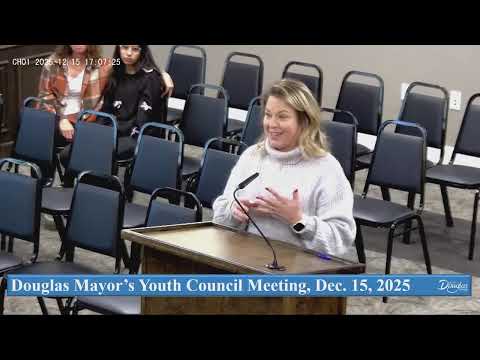
Ashley Robinson, a CTE teacher at Coffee High School, told the Douglas Meyers Youth Council that completing the Early Childhood Education or Teaching as a Profession pathways can yield college credit and practical skills; she described hands-on classroom exercises and invited students to sign up. Enrollment numbers were not specified.
Ashley Robinson, a career-technical educator at Coffee High School, told the Douglas Meyers Youth Council that the school’s CTE program offers two pathways that prepare students for careers working with children.
“Think about a teacher who really made an impact,” Robinson said, urging students to consider teaching as a calling as well as a profession. She described two formal pathways she teaches: Early Childhood Education (ECE), which covers child development from birth through third grade, and Teaching as a Profession (TAP), which prepares students for classroom careers.
Robinson described hands-on class work used to teach practical caregiving skills — including simulated “egg babies,” diaper-changing practice and lessons about soothing colicky infants (so-called “purple crying” education). She said pathways include classroom projects, guest speakers and coursework that can translate into college credit.
“Right now the state of Georgia is actually in a process — it’s just one credit currently, but they’re working to expand it,” Robinson said of pathway college credit. She also said Georgia offers some loan-forgiveness or reimbursement options for teachers who commit to serving in qualifying schools and that Coffee County qualifies as a Title I district; she did not specify exact loan terms or program limits.
During questions, council members asked about career options beyond classroom teaching. Robinson said pathway students often pursue related roles such as pediatric nursing, speech therapy, daycare ownership or school administration, and that the program’s career-exploration unit walks students through pay scales and education requirements.
When asked about annual enrollment numbers for the pathways, Robinson said she did not have those figures available and that participation can fluctuate from year to year.
Robinson invited students interested in either pathway to sign up through the school’s CTAE office and said teachers plan outreach visits to middle and freshman campuses to promote CTE options.
The council applauded Robinson and thanked her for the presentation; no formal action or vote followed the presentation.