Get Full Government Meeting Transcripts, Videos, & Alerts Forever!
Get email alerts on the Juvenile Facility topic
No spam. Unsubscribe anytime.
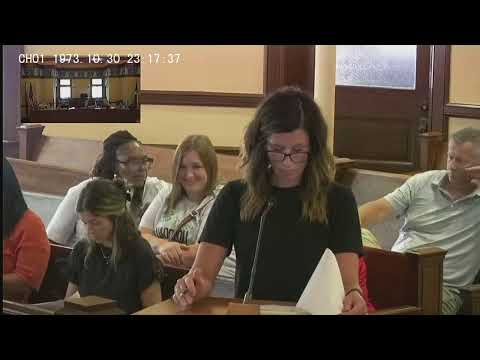
Miss Kirkland asks Harrison County for $1.5M to finish juvenile center repairs and reopen long‑term program
Summary
Miss Kirkland, who oversees the county juvenile facility, outlined a $1.5 million repairs request, described nearly completed 'A pod' renovations adding 12 beds, and said raising per‑day contract rates and filling beds could significantly increase county revenue but staffing remains the key constraint.
Miss Kirkland, the presenter for the county juvenile facility, told the court the facility needs substantial repairs and maintenance and requested approximately $1,500,000 to complete work and ready an additional housing unit.
She said renovations to the facility’s original “A pod” are nearly complete and will add 12 beds. “A pod renovations are almost done,” Kirkland said, listing lighting, plumbing repairs, new cabinets and windows cut into three cells to meet state natural‑light standards. She said the county previously appropriated $200,000 toward building renovations and that contractors accommodated project timing.
Kirkland described several outstanding items that remain to be paid or finished: an upgraded server (she cited a 128‑terabyte server at about $30,000), an initial surveillance payment she described as roughly $39,000 already paid, and additional costs still to finish the pod surveillance work. She gave two different figures while discussing surveillance: an earlier statement that roughly $60,000 remained to finish the pod work and a later comment citing a larger figure (transcript: “$5,060,000”); the court asked that remaining work be clarified before final appropriation.
Kirkland urged the court to consider both the programmatic and fiscal benefits of investing in the facility. She outlined current contracted per‑day rates and potential revenue: “We are charging $125 a day for short‑term pre‑adjudication, $150 a day for post‑adjudication,” she said, and proposed increasing the long‑term rate to $225 and the short‑term to $175. Using those example rates and filling additional beds, she estimated annual revenue could rise from about $593,000 (at current, partial occupancy) to roughly $1,269,250 with the 12‑bed addition and higher rates.
But Kirkland repeatedly cautioned that staffing is the controlling variable. She noted juvenile supervision officers’ hourly pay ranges she sees locally (about $15–$20/hour) and said positions are hard to fill: “If you don't have the people to staff it …” she told the court, “that's the variable that concerns me.” Commissioners asked her to send a pro‑forma spreadsheet showing the revenue assumptions and a list of renovations already completed; Kirkland agreed to provide those documents and to discuss contract rates with the juvenile board, which she said must approve per‑day contracting rates.
Kirkland also detailed programming and safety improvements: generator installation (she cited a roughly $77,000 generator), rekeying and lock repairs, and plans to add counseling and vocational programming via grants or partnerships. She cautioned that some state grant funding carries conditions that would require earmarking beds for state use and that those strings could limit local control.
The court did not take a vote on funding at the session; commissioners requested follow‑up materials and further discussion with the juvenile board before committing county funds.