Get Full Government Meeting Transcripts, Videos, & Alerts Forever!
Get email alerts on the Environment topic
No spam. Unsubscribe anytime.
Planning board hears passionate debate over proposed ban on synthetic pesticides; board votes to remain neutral
Summary
At a lengthy public discussion, KELP representatives and the warrant proponent presented competing views on proposed warrant articles to restrict synthetic pesticides on nonresidential lands. The planning board voted to remain neutral and recommended the measure proceed to town meeting for voters to decide.
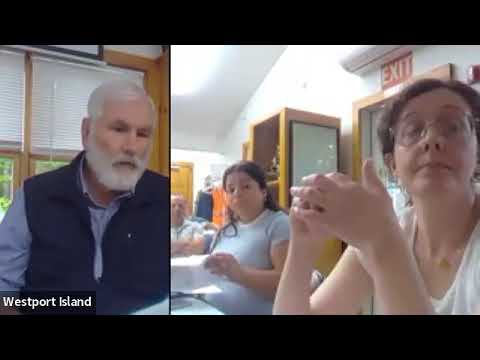
The Westport Island Planning Board devoted its evening to competing views over two warrant articles that would restrict synthetic pesticides on nonresidential properties. Jill Kolak, speaking on behalf of KELP, and Susan Gallagher, who introduced the warrant language, both addressed the board and a crowded public gallery.
Kolak told the board that KELP manages roughly 400 acres on Westport Island and uses an integrated pest‑management approach that occasionally requires targeted herbicide use by licensed applicators to control aggressive invasive plants. “The proposed ordinance change would remove this tool from KELP...but continue to allow homeowners to use products without the same training,” she said, arguing that the change could increase habitat disturbance and impede professionals’ ability to manage invasives.
Gallagher, the warrant proponent, said the measure is intended to establish a community standard on synthetic pesticides applied to nonresidential land and was not targeted at any single organization. “The proposed ordinance applies broadly and equally,” she said, urging a precautionary approach because of continuing scientific debate about glyphosate and similar compounds.
Technical testimony from Dylan, a licensed applicator working with KELP, described differences between aquatic‑rated formulations and retail products, state buffer rules around wetlands and the agency complaint process. He said applicators maintain state‑required logs and use selective techniques such as cut‑stump treatment and small‑scale spot applications to minimize off‑site exposure.
Board members and residents debated tradeoffs: several said invasive species can require chemical tools to achieve durable control, while others urged more public education and broader restrictions — and flagged enforcement limits if residential use were covered. After discussion the planning board voted to stay neutral on the warrant and to let town meeting voters decide; the chair urged civility and more community outreach before town meeting.