Get Full Government Meeting Transcripts, Videos, & Alerts Forever!
Get email alerts on the Budget topic
No spam. Unsubscribe anytime.
Marathon County outlines 2027 budget assumptions, proposes 'bucket' prioritization for new revenue
Summary
County administrators proposed conservative revenue assumptions (1.65% net new construction, $17 million in sales tax) and a 'bucket challenge' that gives supervisors discrete 'chips' to allocate new revenue across priorities, including possible expansion of crisis response hours and capital projects.
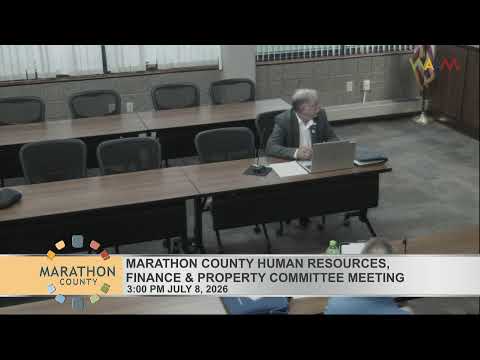
Marathon County administrators briefed the Finance and Property Committee on the framework for developing the 2027 budget and asked standing committees to review programs within their purview and recommend changes.
Administrator Lance Leonard told the committee the goal is to increase board input early in the process so the final budget better matches county priorities. "I have to present a budget," Leonard said, "but I take no pleasure in having my staff ... work to put together a budget, then we show up the year after and there are 25 amendments." Leonard recommended a more iterative approach so committees can shape the budget before adoption.
Staff proposed two core revenue assumptions used to build the draft: a 1.65% net new construction estimate (projected to bring roughly $850,000–$900,000) and a $17,000,000 sales tax projection. Leonard said the assumptions would yield about $2 million in net new dollars for allocation after accounting for other revenue changes.
To translate those assumptions into priorities, staff proposed a "bucket challenge": county supervisors would receive a fixed number of "chips" representing available new money and place them on priorities such as employee compensation, benefits, crisis assessment response team (CART) expansion, or capital improvements. Leonard said the process is intended to reveal collective priorities rather than lock staff into exact dollar amounts.
Committee members pressed staff for more dollar-level detail on percentage assumptions and for the fiscal effect of proposed percentage changes to public charges and intergovernmental items. Chair Gibbs asked staff to return estimates translating percentage assumptions into dollar values.
The committee did not adopt final assumptions at the meeting but will revisit the projections at its next session so the bucket exercise can proceed with clearer dollar amounts.