Get Full Government Meeting Transcripts, Videos, & Alerts Forever!
Get email alerts on the Short Term Rentals topic
No spam. Unsubscribe anytime.
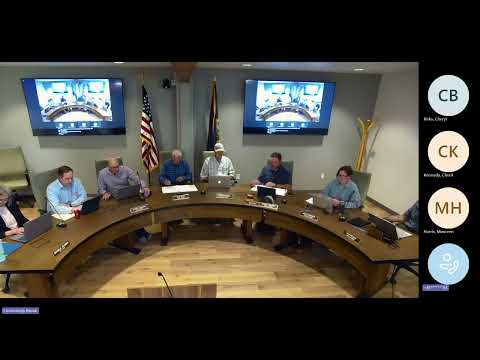
McCall council adopts ordinance to conform city code to new state short‑term rental law
Summary
The council voted to adopt Ordinance 10 38, removing locally imposed short‑term rental permits and standards to align McCall code with Idaho House Bill 583; the city will keep local option tax filing and pursue voluntary safety collaborations.
The McCall City Council adopted Ordinance 10 38 on July 2, amending city code Titles 3 and 4 to conform with Idaho House Bill 583 and removing most local short‑term rental (STR) permitting and standards.
Michelle Greenevalt, the city’s community and economic development director, told the council the ordinance replaces the city’s prior STR definition with the state definition and strikes local rules that are no longer legally permitted under HB 583. "This is a significant change to our community," Greenevalt said, listing deleted provisions that include occupancy limits, conditional‑use permitting for certain rentals, ADU owner‑occupancy requirements, posted notice and health‑and‑safety inspection standards. She emphasized that the local option tax filing requirement remains in place.
Council discussion focused on enforcement and tax remittance. Staff explained that marketplace platforms (for example, Airbnb and similar marketplaces) will remit local option tax on behalf of hosts when the platform qualifies as a marketplace, while operators who rent independently must remit taxes themselves. Greenevalt summarized the city’s enforcement process for nonpayment: notice, violation second notice, and potential misdemeanor charges for persistent noncompliance.
The council read the ordinance by title and then adopted it by roll call vote; the clerk recorded unanimous affirmative votes. The ordinance text provided cross‑outs showing the previously applicable chapters so the city can reference prior standards if the state law changes in future.
Why it matters: The change removes local controls the city used to manage neighborhood impacts (parking, noise, occupancy and required inspections). Council and staff said the community could still pursue voluntary safety programs—such as continued coordination with the fire district for optional inspections—but they no longer have the authority to impose the deleted regulatory standards.
What's next: Staff advised continued outreach to STR operators about tax obligations and suggested monitoring short‑term rental activity and police calls for service to track any change in neighborhood impacts following the ordinance adoption.