Get Full Government Meeting Transcripts, Videos, & Alerts Forever!
Get email alerts on the Data Centers topic
No spam. Unsubscribe anytime.
Representative urges Mount Vernon to adopt transparency rules for data centers; resident warns to act before applications arrive
Summary
State Rep. Cindy Golding told Mount Vernon officials that HF 2690—her transparency bill for data centers—would require disclosures on electricity, water use and effluent; a local resident urged the council to adopt local ordinances now so the city is not a "path of least resistance."
State Representative Cindy Golding told the Mount Vernon City Council that local governments should adopt ordinances requiring basic disclosures from data‑center developers — how much electricity and water a facility will use, where the water will come from and how effluent and excess heat will be managed. Golding said she authored HF 2690 to secure that transparency and described industry pushback that defeated the measure at the state level.
"I wrote a bill for data centers, HF 2690," Golding said, adding the bill asked only for data useful to municipal planning: "Tell us how much electricity you're going to use and how you are going to make sure it doesn't affect ratepayers. Tell us how much water you're going to use. What is the water source? What are you going to do with the effluent?" She said HF 2690 passed committee unanimously but was later killed after lobbying by large companies.
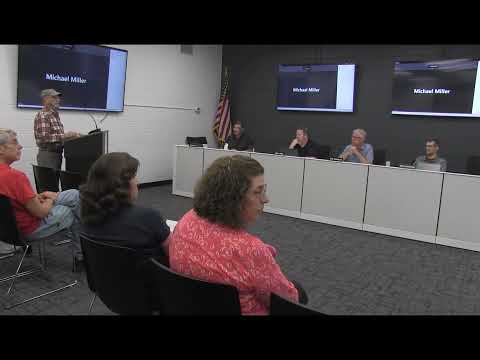
The discussion began after resident Nathan Walter urged the council to reconsider its earlier decision to delay local ordinances, saying the city risks becoming a quick alternative for developers while the county considers a moratorium. "In order for the city to protect our citizens long term and give this council the time it needs to make well informed decisions, I urge you all to reconsider and start those conversations now," Walter said.
Golding and several council members warned that some planning and permitting decisions are constrained once utilities and transmission siting proceed. Golding told the council that the Iowa Utilities Commission can control where power plants and transmission lines are sited and, she said, effectively limit what local governments can do after a project advances.
Council members asked Golding for a concrete timeline and specific examples to guide local responses; Golding requested feedback by the end of September so legislators could shape any future bills or clarifications. No formal ordinance was introduced at the meeting; the council discussed next steps and asked staff to collect more information for a possible future agenda item.
Next steps: Council members agreed to stay engaged and to provide input to Representative Golding by the suggested timeframe so the city can evaluate ordinance language and planning implications before an actual application arrives.