Get Full Government Meeting Transcripts, Videos, & Alerts Forever!
Get email alerts on the Housing Policy Adus topic
No spam. Unsubscribe anytime.
Glendora planning commission recommends zoning changes to align ADU, JADU and SB 9 rules with state law
Summary
Staff said HCD technical assistance letters prompted targeted changes to Title 21 to comply with state law; commissioners recommended the ordinance to the City Council 4–0, removing a local 'verifiably live' SB 9 owner-occupancy requirement and clarifying ADU/JADU counting and owner-occupancy rules.
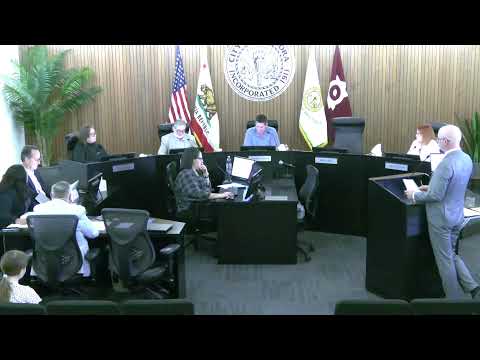
The Glendora Planning Commission voted unanimously to recommend that the City Council adopt an ordinance updating Title 21 of the municipal code to align accessory dwelling unit (ADU), junior ADU (JADU) and SB 9 urban lot split regulations with state law and guidance from the California Department of Housing and Community Development (HCD).
Assistant Community Director Sean McPherson told the commission that HCD issued technical assistance letters in December 2025 and January 2026 identifying code provisions that could be inconsistent with state law. Staff framed the proposed ordinance as focused, targeted amendments to ensure compliance rather than a broad rewrite of the zoning code.
Key changes explained by staff include removing local language that required SB 9 applicants to “verifiably live” on the property at the time of application and instead relying on owner-occupancy affidavits consistent with state law; the affidavit standard asks applicants to state an intent to occupy one unit as their principal residence for at least three years. For JADUs, staff clarified that owner-occupancy would be required only when the JADU shares sanitation facilities with the primary dwelling; if the unit has a separate bathroom, owner-occupancy is not required. For multifamily properties, the ordinance clarifies that up to eight detached ADUs may be allowed provided the number of detached ADUs does not exceed the number of existing multifamily units on the lot, and it clarifies how conversion ADUs are counted.
Commissioners raised enforcement and policy questions. Commissioner Koss asked how enforceable an affidavit of intent is in practice; McPherson and another staff member responded that the affidavit is filed with the application, signed under penalty of perjury, and that state law limits the city's ability to impose additional owner-occupancy verification or enforcement measures. Commissioner Jarvey asked whether ADUs could raise property values and reduce housing affordability; staff said the state-driven changes aim to increase housing supply and that the city's immediate objective is to maintain compliance with state law.
The commission found the ordinance exempt from CEQA, and Chair Davis moved that the commission recommend the City Council introduce and adopt the ordinance; the motion passed 4–0.
Next steps: the commission's recommendation forwards the ordinance to the City Council for its consideration and potential adoption. If the City Council acts, the code changes will take effect per the council's adopted schedule.
Sources: Staff presentation by Sean McPherson; commission Q&A, public hearing record (no public speakers), and the motion and vote recorded at the planning commission meeting.