Get Full Government Meeting Transcripts, Videos, & Alerts Forever!
Get email alerts on the Code Of Conduct topic
No spam. Unsubscribe anytime.
Ossining board adopts updated code of conduct, adds dress-code language and emphasizes restorative practices
Summary
The Ossining Union Free School District Board adopted a revised code of conduct after a public hearing that highlighted restorative-practices training, a one-page family summary and a small textual addition to align dress-code language with district policy.
The Ossining Union Free School District Board of Education on July 8 adopted an updated district code of conduct that adds a short sentence clarifying that “extremely brief garments and see-through garments are not appropriate” and emphasizes restorative practices and alignment between policy and school procedures.
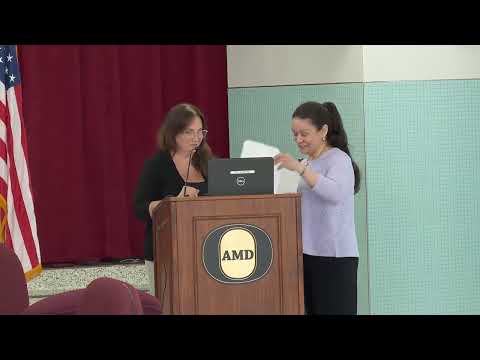
At a public hearing required by Education Law 2081-a and 8 NYCRR 155.17, Anne Dealey, who led the code-of-conduct committee presentation, said the committee’s work focused on reducing exclusionary discipline and implementing restorative approaches across the district. “The real change that we’re gonna look at today is really just the language of the code of conduct around dress policy,” Dealey said, while walking the board through training, the district’s progressive behavior rubric and plans for a family-friendly one-page summary.
Superintendent Mary Foxhalter briefed the board on the committee’s process and the district’s training work, noting a multi-day leadership training and a state grant that allowed the district to secure coaching and nine complimentary slots for community circle training. Foxhalter said that principals and assistant principals had reviewed the language after piloting the code in buildings and that the policy committee would follow up with a full review of the dress-code policy.
Board members asked whether the new dress-code line would create ambiguity in enforcement and whether concrete examples should be added to reduce subjectivity. Dealey and administrators said principals reached a shared operational understanding during committee deliberations but acknowledged that administrative guidance and a future policy review would be the place to add clarity.
During the public comment portion of the hearing Harmony (Zahira Martin), who identified herself as a local contractor and program developer, urged the board to include student voice in conversations about dress and policy. “Students may provide insight that would help you facilitate the codes you come up with, where there’s a medium where they feel seen and heard,” she told the board.
The adoption occurred as part of the board’s consent agenda (resolution 6.9). The board approved the consent business by voice vote; the minutes record the motion carrying on the ayes. The board also recorded that the code remains a living document the district will revisit for alignment and clarity as implementation proceeds.
What’s next: the policy committee will review the broader dress-code policy to determine whether examples or further clarifying language are advisable and staff will provide follow-up implementation guidance to principals and school leaders.