Get Full Government Meeting Transcripts, Videos, & Alerts Forever!
Get email alerts on the Meeting Procedure topic
No spam. Unsubscribe anytime.
Town attorney gives planning commissioners a primer on motions, conditions and ethics
Summary
Town attorney Nicholas Hartman advised commissioners on meeting management and quasi‑judicial practice, emphasizing that conditions must be grounded in code, motion language should be affirmative, ex‑parte contacts should be avoided, and conflicts of interest should be disclosed or recused.
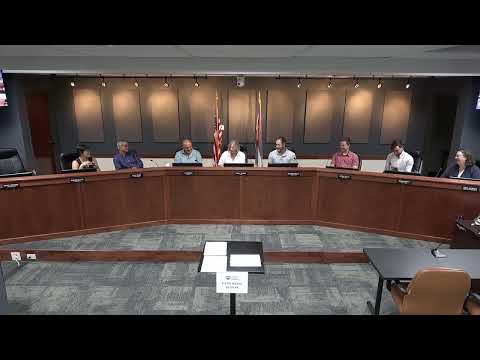
Town attorney Nicholas Hartman provided an extended training for the Planning Commission on rules and best practices for quasi‑judicial and land‑use hearings.
Hartman urged caution about drafting conditions that are subjective or impossible for applicants to meet and recommended keeping conditions grounded in code standards such as setbacks or parking. “What you don’t wanna do is make conditions…that are not grounded in the code,” he said, noting that impossible conditions can result in approvals that are never implementable.
He also advised consistent public‑comment time limits and said commissioners should adhere to whichever standard they set: "Whatever you decide on your time limits, 3 minutes and 5 minutes are the most common. Whatever you decide, I strongly implore you to stick with it and stick with it at every meeting for the rest of time." Hartman discussed ex‑parte contacts, conflict‑of‑interest guidance (financial transactions and personal relationships), and the practical advantage of framing motions in the affirmative (e.g., "I move to recommend approval..." rather than "I move to not recommend").
Hartman described the comp plan as nonbinding compared with the land‑use code and urged commissioners to use the comp plan to inform decisions, not as a higher legal standard. He also recommended procedural improvements—clear scripting, staff worksheets and criteria sheets—to create a robust record and reduce late‑night drafting of conditions.
Commissioners asked a range of procedural questions about conditional approvals, how staff can help craft motions, and how to handle cases when staff does not support an application. Hartman said staff can provide sample motions and that either "recommend approval" (with a subsequent 'no' vote if commissioners oppose) or a staff recommendation of denial are allowable approaches, while cautioning against motions framed only as double negatives.