Get Full Government Meeting Transcripts, Videos, & Alerts Forever!
Get email alerts on the Infrastructure Funding topic
No spam. Unsubscribe anytime.
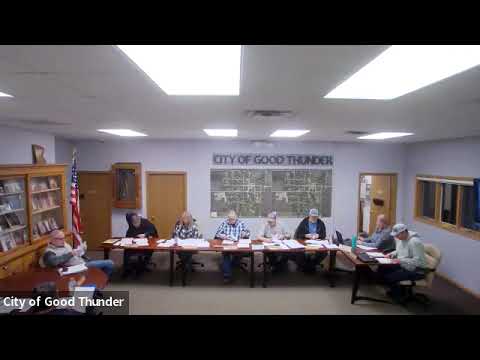
Good Thunder council approves resolution to pursue state funding and orders design work for water system
Summary
The city approved a resolution to apply to the Minnesota Public Facilities Authority for water, wastewater and stormwater funding and authorized two Bollington Engineering task orders — roughly $957,000 for design/bidding and $50,000 for a facility plan — to preserve the town’s place on the funding list.
The Good Thunder City Council on a voice vote approved a resolution authorizing the city to apply to the Minnesota Public Facilities Authority for improvements to its drinking water, wastewater and stormwater systems and to reimburse planning and design costs if grants or loans are later awarded. The council immediately authorized two task orders with Bollington Engineering to begin design and facility planning work.
Consultants from Bollington Engineering told the council that Good Thunder appears on the PFA intended-use list published that day and that the city must begin design certification to preserve its place in line for scarce state funds. Brian Bollick (speaker 1) said the state lowered its usual point threshold, making Good Thunder eligible this cycle, but cautioned that eligibility is not permanent without beginning design work.
In discussion, consultants described a multi-million-dollar infrastructure package that would include a new water treatment plant, a new production well and raw-water piping, plus sanitary and storm sewer work. The engineering firm presented a preliminary design-and-bid estimate for drinking-water items of about $957,000 (task order 2) and said adding sanitary/storm items to a facility plan (task order 3, $50,000) would allow those pieces to be considered as ancillary work if the water project moves forward.
Councilor (speaker 3) moved to approve the resolution (described in the meeting as resolution 2026-3) and Bollington’s task orders; another councilor (speaker 4) seconded the motions. The council approved the resolution and both task orders by voice vote; one member recorded opposition during the resolution vote. The resolutions and task orders authorize the city to sign engineering contracts and to seek reimbursement of planning and design expenses if and when PFA grants or loans are awarded.
Bollington’s staff and the council outlined an accelerated timeline: a facilities plan or facility-plan elements should be filed this spring and intended-use materials submitted by June so projects remain eligible for 2027 construction funding. Consultants warned the state’s funding priorities change year to year and said design certification (not just listing) protects a project’s place in the queue.
The immediate next steps the council approved are: sign the resolution to preserve reimbursement eligibility, execute Task Order 2 to complete final design and bidding for the drinking-water items, and execute Task Order 3 to add sanitary and storm items to the facility plan. Bollington staff said most design costs are reimbursable after a funded construction contract is issued through PFA processes.
The meeting closed with staff committing to return with more detailed costs and a project schedule; the council will review funding options (city reserves versus borrowing) as the design work produces more precise estimates.