Get Full Government Meeting Transcripts, Videos, & Alerts Forever!
Get email alerts on the Short Term Rentals topic
No spam. Unsubscribe anytime.
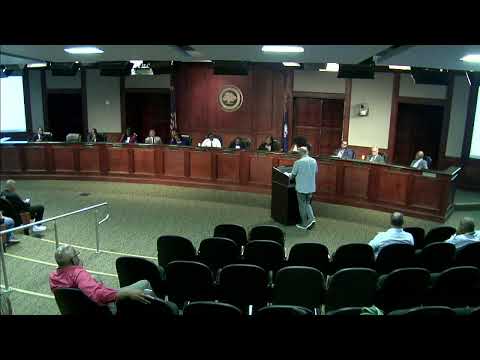
North Charleston debates short‑term rental changes including $1,000 transfer fee
Summary
City staff presented a first reading of amendments to short‑term rental rules that would raise exemption thresholds, allow some room rentals, exempt commercial zones from per‑district caps and add a $1,000 transfer fee; council referred the measure to the Public Safety Committee after questions about traffic and noise mitigation.
City staff on July 9 presented a first reading of changes to North Charleston's short‑term rental (STR) rules that would raise exemption thresholds, permit detached owner‑occupied room rentals, exempt B‑1 and B‑2 properties from district caps, and impose a new $1,000 STR permit transfer fee in addition to the existing $350 permit charge.
The staff presentation outlined five principal changes: raise the number of rental units required to exempt a property from the 60‑permit cap per council district from 10 to 20; allow owner‑occupied room rentals in detached buildings; exempt properties zoned B‑1 or B‑2 from the 60‑permit cap; establish a $1,000 transfer fee for STR permits in addition to the $350 permit fee; and update miscellaneous clarifications across STR requirements. "The proposed amendment would increase the number of rental units ... and establish a $1,000 transfer fee," the planning staff said during the presentation.
Why it matters: Council members and residents tied the proposed transferability and fee changes to housing availability and neighborhood character. Resident Larry LaRoche told the council that permitting transferable STR licenses would "attach a permanent commercial entitlement to the residential property," arguing it would permanently convert homes into short‑term businesses, complicate enforcement and worsen the local housing crunch. LaRoche said District 8 already has about 161 STRs and District 10 more than 200, and warned transferability would lock inventory out of the long‑term market.
Council discussion focused on implementation details and impacts. Dr. Ganaway Paisley asked staff how the city plans to mitigate additional traffic and noise along transportation corridors as employment‑center zoning and STR exemptions change; staff requested time to provide specific responses and the mayor said follow‑up (Ryan Johnson) would appear at a subsequent meeting. Without objection, the council referred the STR ordinance to the Public Safety Committee for further review and consideration.
Next steps: The item was taken as a first reading and will be reviewed in Public Safety Committee; staff will provide requested follow‑up on corridor noise and traffic mitigation before council consideration of additional readings.
Attribution: Planning staff (city planning) presented the ordinance language; Dr. Ganaway Paisley raised the specific corridor mitigation question; resident Larry LaRoche urged the council to keep STR licenses nontransferable to protect housing supply.