Get Full Government Meeting Transcripts, Videos, & Alerts Forever!
Get email alerts on the Zoning Variances topic
No spam. Unsubscribe anytime.
Howard County Board of Zoning Appeals unanimously approves four variance requests
Summary
At its July 23 meeting, the Howard County Board of Zoning Appeals — with four voting members present — approved four variance requests for accessory structures and a small new home, citing practical difficulties caused by lot configuration, septic placement and shoreline constraints.
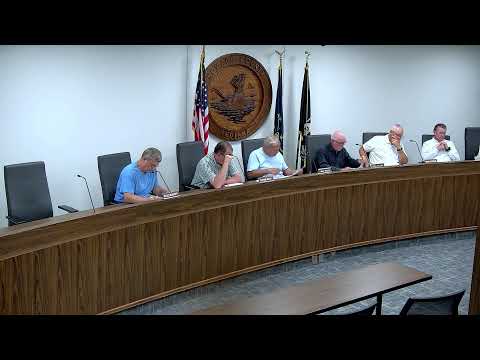
Howard County Board of Zoning Appeals on Tuesday, July 23, with four voting members present, unanimously approved four variance requests allowing property owners to place accessory structures or build a smaller home in rural-residential zones.
The approvals covered: a 14-foot rear-yard setback variance for a 90-by-80 pole barn; a 20-foot front-yard setback variance and an accessory-placement variance for a front-yard pole barn on a corner lot; a 576-square-foot reduction in required main-floor area to permit a 1,024-square-foot, two-bedroom, one-bath home; and a 10-foot front-yard setback variance to permit a 40-by-40 pole barn. Each petition was read into the record, staff presented findings recommending approval on the basis of minimal impacts to neighbors and practical difficulties created by lot shape, septic locations or shoreline constraints, and the board then voted to approve each case.
The board convened with one member hospitalized in Annapolis; the presiding official asked for a moment of silence and noted that, because the board is a five-member body and only four members were present, it required three votes to approve or deny any petition. “It takes 3 votes to pass or 3 votes to deny,” the staff reader stated while outlining procedure.
Case summaries
• Case 6 CV 28 (Samuel J. Hersberger) — Petition for a 14-foot variance to Howard County zoning ordinance section 2.004 (minimum rear-yard setback) to construct a 90-by-80 pole barn at 3475 South 400 East. Staff reported the barn would be located far from the road, outside easement lines, would not create vision clearance issues, and that strict application of the ordinance would cause practical difficulty because the existing home is close to the rear property line. The board voted to approve the variance.
• Case 7 CV 26 (Skyler Royalty) — Petition for a 20-foot variance to Howard County zoning ordinance section 2.1 o (minimum front-yard setback) and a variance under section 5.03 d (accessory structure placement) to allow an accessory structure in front of the primary dwelling at 1468 South 1010 East. Staff noted the corner lot presents two front yards and that the septic location limits placement options; a commissioner asked whether driveway permitting would be required and staff clarified that driveway permits are issued by the Howard County highway department, not the zoning office. The board approved the variance.
• Case 8 CV 26 (Alex Bishop for Jason Aptown) — Petition for a 576-square-foot variance to section 2.1 o (minimum main-floor area) to construct a 1,024-square-foot, two-bedroom, one-bath home at the address listed in the record (transcript: “717114 East 50 North”). Staff cited soil-test results from the county health department indicating the lot can support only a two-bedroom, one-bath dwelling and noted the lot’s shape and a reservoir shoreline limit building placement. The board granted the requested variance.
• Case 9 CV 26 (Jared Galtz for Brandon Alexander) — Petition for a 10-foot variance to section 2.1 o (minimum front-yard setback) and a section 5.03 accessory structure placement variance to construct a 40-by-40 pole barn in front of the house at 12888 West 200 North. Staff reported the proposed structure would set 30 feet back from the front property line, not encroach on recorded easements, comply with pertinent codes, and would not adversely affect adjacent properties; the board approved the variance.
Votes at a glance
All four motions were passed by voice vote with unanimous “Aye” responses from the members present. The board operated with four voting members (a five-member board with one member absent due to hospitalization), and staff advised petitioners that they could request postponement to await a full panel if they preferred to do so.
What the board said and next steps
Staff readings repeatedly concluded that approval “will not be injurious to public health, safety, morals, and general welfare of the community,” language used across the staff findings for multiple cases. After the final case the board heard no additional business, a dismissal motion was made and seconded, and the meeting was dismissed. Petitioners who received approvals were directed toward permitting steps as applicable.