Get Full Government Meeting Transcripts, Videos, & Alerts Forever!
Get email alerts on the Urban Forestry topic
No spam. Unsubscribe anytime.
Consultant outlines Mount Lebanon street-tree plan, flags high maple concentration and staffing gaps
Summary
Davy Resource Group told the Parks Advisory Board its draft street-tree management plan identifies about 9,000 municipal street trees, a very high concentration of maples, limited maintenance data and three full‑time forestry staff — and recommends updated species guidance, inspections and staged replanting.
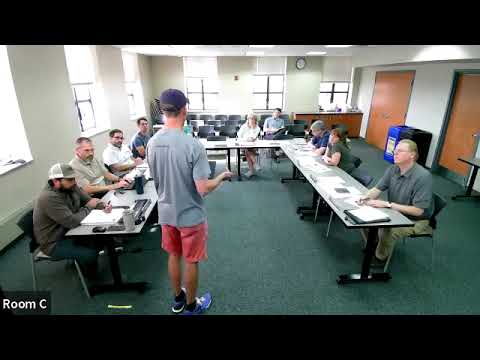
Matt Irvin, a consultant with Davy Resource Group, presented a draft street-tree management plan to the Mount Lebanon Parks Advisory Board, saying the town’s municipal inventory covers roughly 9,000 street trees and shows an overconcentration of maples that raises disease and resilience concerns.
Irvin told the board that the inventory and operations review found limited maintenance attributes and risk assessments attached to individual trees and that the forestry division’s three dedicated staff are largely reactionary, leaving little time for proactive maintenance. “There’s about 9,000 trees on Mount Lebanon streets that the municipality takes care of,” Irvin said, and he reported a very high share of maples compared with industry guidance.
The consultant urged several near-term and programmatic steps: revise the species list to reduce overreliance on any single genus, add routine risk-assessment attributes to the inventory, stagger removals and replanting to avoid wholesale canopy loss on streets with aging trees, and provide clearer communications to residents about maintenance requests and timelines. Irvin said the team would deliver a consolidated final plan in late summer or early fall.
Board members pressed the consultant on specifics. Members asked whether the survey responses distinguished municipal street trees from privately owned trees; Irvin said some survey responses do conflate the two, but staff and on‑site engagement helped clarify many entries. On utility conflicts, Irvin said burying power lines is effectively outside this plan’s scope because burial costs can run into the millions per mile and trigger additional home electrical upgrades.
On species selection the board focused on long-term resilience and nursery availability. Irvin said the revised species list will emphasize verticillium- and drought‑resistant choices and acknowledged nursery supply constraints for certain native species; he also cited the value of planting smaller-caliper trees that will grow over time rather than always specifying larger, more expensive stock.
The presentation included outreach results: nearly 1,000 residents responded to a community survey, Irvin said, and common themes were strong resident appreciation for the town’s trees, concerns about dead branches and safety on streets with very mature trees, and requests for clearer service-request follow-up.
Next steps identified at the meeting included sharing near-final drafts with advisory-board members for feedback, continuing operations benchmarking, and developing an inspection protocol for aging or at‑risk streets. The consultant said the final plan will include recommended staffing and budget implications, though he noted existing capacity constraints in operations.