Get Full Government Meeting Transcripts, Videos, & Alerts Forever!
Get email alerts on the Civic Process topic
No spam. Unsubscribe anytime.
Craig council adopts new public-comment rules, presentation procedures and moves meeting time earlier
Summary
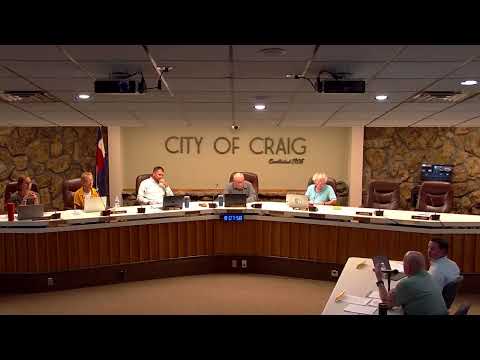
On June 23 the Craig City Council adopted a package of resolutions that (1) allow the city manager, mayor and city attorney to temporarily pause limited public comment in narrowly defined circumstances, (2) create a general public comment period at the second meeting of each month, (3) set criteria for formal presentations, and (4) move regular meeting start time to 5:30 p.m.
The Craig City Council approved a package of procedural changes on June 23 that alters when and how residents may address the council and adjusts the council's regular meeting start time.
Assistant City Attorney Gary Roden presented Resolutions 25–28 as a coordinated set of rules. Roden said the pause provision (resolution 25) would allow the city manager, in consultation with the mayor and city attorney, "to temporarily pause public comment periods only and only when necessary to address specific legal or procedural issues," describing it as an emergency procedure for unforeseeable circumstances. Roden framed the rules as designed to keep meetings lawful and orderly while preserving written-comment opportunities.
Resolution 26 establishes a new general public comment period at the second regular council meeting each month that allows members of the public to address the council on any city matter (three minutes per speaker); resolution 27 sets objective criteria and an appeal path for formal presentations; and resolution 28 changes the regular meeting start time from 6:30 p.m. to 5:30 p.m., intended to make meetings more accessible to working families and shorten late-night meeting hours.
Council members debated timing and process. Some members said they preferred to wait until absent colleagues could weigh in; others said delaying would push the package past an uncertain schedule of future meetings. Council also discussed whether starting at 5:30 p.m. might be inconvenient for residents who commute from neighboring communities; one councilor suggested 6 p.m. as a compromise but the council voted to adopt the 5:30 p.m. start time and the other resolutions as presented.
The package passed largely by unanimous voice votes (resolutions 25–27 recorded as 5–0); the time-change resolution passed after discussion. The council and staff said the new procedures can be amended later if operational experience shows changes are necessary.
What to watch: The pause provision permits temporary restriction of public comment only under narrow, emergency circumstances; council members emphasized written comment and an intent to preserve viewpoint-neutral administration of the rules.