Get Full Government Meeting Transcripts, Videos, & Alerts Forever!
Get email alerts on the Water Policy topic
No spam. Unsubscribe anytime.
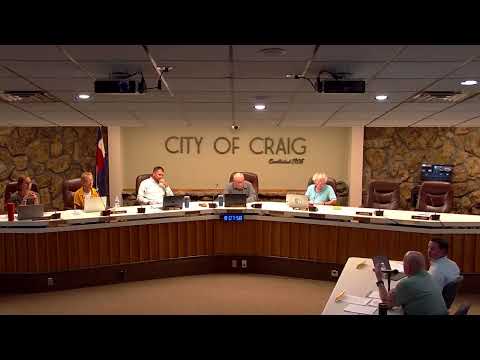
Craig council bars residential graywater systems, citing oversight burden and low demand
Summary
The City of Craig approved Ordinance 11-84 on June 23, 2026, opting out of allowing residential graywater treatment systems citywide. Building official Marlon Neckoff told council that state law required either adoption of standards or a local opt-out and staff recommended opting out now because of reporting, oversight and health concerns.
The Craig City Council voted June 23 to adopt Ordinance 11-84, prohibiting the use and installation of graywater treatment systems inside city limits.
Building Official Marlon Neckoff told the council the state recently required municipalities to either adopt state graywater standards or explicitly opt out. "This ordinance basically, opts out of this so that we're not, under the state requirements as we kind of currently are as far as gray water usage is concerned," he said, noting that allowing graywater would require the city to create a "gray water control program" with extensive reporting and oversight.
Neckoff said categories of graywater use include showers, laundry and sinks, and that an individual home might save "10 to 15,000 gallons annually" depending on system type and use. He cautioned, however, that citywide savings are hard to estimate and that local demand appears low due to high upfront costs for installation. "In the 11 years I've been here, we haven't had 1 person that's asked or been interested in installing it," he said.
Council members asked whether minor collection (for example, dumping a five-gallon bucket to water flowers) would be enforced; Neckoff replied enforcement would focus on piped, treated systems and that casual collection and disposal would not likely prompt city enforcement. He also flagged potential landscaping and soil impacts from detergents and other water contaminants if systems were not properly designed.
Mayor Nichols moved to approve the ordinance; the motion carried by voice vote with no recorded opposition. The ordinance formally opts the city out of permitting graywater treatment works at this time and allows staff or council to revisit the question later if circumstances change.
What happens next: the ordinance implements the local opt-out that Neckoff said is allowable under the cited state law. Council discussion did not identify a timeline for revisiting the policy; staff suggested future consideration would include public-health review, pilot programs and community outreach if interest grows.