Get Full Government Meeting Transcripts, Videos, & Alerts Forever!
Get email alerts on the Hate Prevention Community Engagement topic
No spam. Unsubscribe anytime.
Council committee hears testimony on expanded prevention programs, community grants and underreporting of hate incidents
Summary
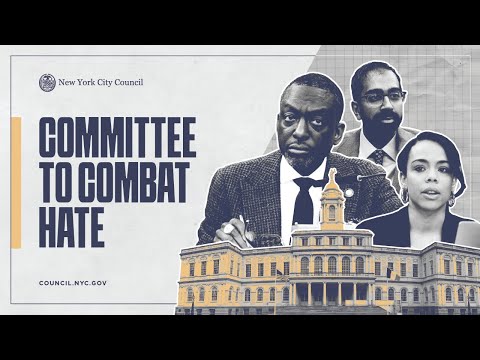
The New York City Council Committee to Combat Hate reviewed city prevention programs and a major increase in funding for the Office for the Prevention of Hate Crimes during an oversight hearing. City officials described PATH, neighborhood pilots, youth outreach and seed grants; community groups urged sustained funding and better multilingual reporting.
Chair Yousef Salaam opened the Committee to Combat Hate hearing by saying New York’s diversity is "our greatest strength" and framing the day’s discussion around how community engagement can prevent and respond to hate and bias.
Vijay Ram Jatin, executive director of the New York City Office for the Prevention of Hate Crimes (OPHC), told the committee that preventing hate “before it ever takes hold is not peripheral to public safety, but rather it is central to it.” He described PATH (Partners Against the Hate) as OPHC’s backbone prevention initiative, listed six anchor partners and said PATH and OPHC-led programming ran nearly 700 events in fiscal year 2025 that reached about 62,000 participants in more than 20 languages. He also described youth work—including school curricula and a Youth Ambassador Leadership Program—and a pilot dialogue series along the Roosevelt Avenue corridor nicknamed "7 on 7."
Felisa Wisdom, executive director of the mayor’s office to combat antisemitism (MOCA), described a boroughwide listening tour and a small, growing staff that she said will produce an initial municipal strategy to combat antisemitism by the end of the summer. "While hate crimes as a whole are on the decline, we see a distressing trend of rising hate crimes targeting the Jewish community, making up over 50% of the sum total," Wisdom said, urging stronger education and interagency coordination.
Council members pressed OPHC and MOCA on how partners are chosen, how funds are allocated and how the city tracks and alerts local officials to incidents. OPHC said its anchor organizations historically shared a prior $3 million pool equally and that the office has deployed seed grants and community project grants (about $10,000 each) to meet spikes in local incidents; it said it sends notifications to community boards, community-based organizations and elected officials within 24 hours of receiving NYPD reports.
Community witnesses urged the council to sustain and expand funding for community-based prevention and survivor services. Scott Richmond, ADL regional director for New York and New Jersey, cited ADL tracking that recorded 1,160 antisemitic incidents in New York state in 2025 and called for more educator training and school programming. Julio Sazarera of the Hispanic Federation and Amo Oluk of the Sikh Coalition described PATH partners’ reach and warned that many incidents remain unreported, particularly in multilingual and immigrant communities.
Speakers from care and advocacy groups highlighted persistent reporting gaps: Care New York (representing Muslim communities) told the committee its data show substantial increases in anti-Muslim incidents between 2020 and 2025 and said only a small fraction of victims report to law enforcement. The Anti-Violence Project said its crisis hotline volume is up roughly 35% and that legal and mental-health services for survivors are under strain.
The hearing clarified several program details but also surfaced inconsistent budget figures in testimony. OPHC testimony repeatedly referenced a historic funding expansion under the Mamdani administration described as enabling an 800% increase in programming capacity; separately, witnesses referenced both a $26,000,000 and a $29,000,000 figure for increases tied to mayoral investments. The committee did not resolve the numerical discrepancy in-session; council staff and witnesses said city budget documents and follow-up budget hearings would provide authoritative numbers.
The committee opened the hearing for public testimony and heard multiple community organizations urge sustained investment, multilingual outreach, better reporting channels and expanded school programs. Chair Salaam closed the hearing after the panels and public testimony concluded and invited written follow-up materials for the record.
The committee did not take formal votes during the session. Next procedural steps noted on the record were follow-up requests from council offices for grant recipient lists, confirmation that hate-notification lists include council emails, and a promise by OPHC and partners to provide additional program metrics and applicant lists to council staff.