Get Full Government Meeting Transcripts, Videos, & Alerts Forever!
Get email alerts on the Unops Profile topic
No spam. Unsubscribe anytime.
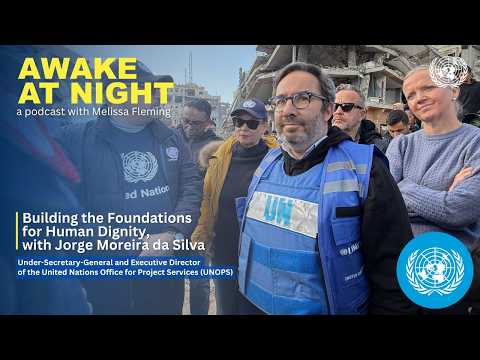
UNOPS chief emphasizes 'can‑do' delivery in conflict zones, from Afghanistan to Sierra Leone
Summary
Georges Mariera da Silva describes UNOPS as a hands‑on delivery agency that implements infrastructure, early‑warning and livelihoods projects in fragile contexts, highlights staff risks, and says UNOPS spent recent years reforming and expanding partnerships.
Georges Mariera da Silva, Under‑Secretary‑General and Executive Director of the United Nations Office for Project Services (UNOPS), told host Melissa that UNOPS is a fee‑for‑service delivery organization that handles procurement, project management and on‑the‑ground implementation in fragile and conflict‑affected countries.
"It's an organization that has almost 6,000 personnel working in 130 countries with a delivery of $3,000,000,000 per year," Mariera da Silva said, stressing UNOPS’s concentration in difficult operating environments such as Myanmar, Afghanistan, Mozambique and Gaza.
He outlined concrete projects to illustrate UNOPS’s approach: early‑warning systems for storms in Timor‑Leste to strengthen adaptation; mangrove protection in Kiribati for resilience against climate impacts; and solar‑powered mini‑grids with batteries in Sierra Leone to bring electricity to remote hospitals and schools where continental transmission lines are infeasible.
On livelihoods and stabilization, he described a community resilience and livelihoods program in Afghanistan that rehabilitates roads, streets and water canals and pays men and women through cash‑for‑work arrangements. "Fifteen million people benefit from a project called community resilience and livelihoods," he said, describing local hiring, community‑led prioritization of works and the program’s role in providing household income.
Mariera da Silva discussed his reasons for joining UNOPS: a desire to move from policy design to on‑the‑ground delivery, and to help rescue and reform UNOPS after a governance crisis. He said reforms are largely complete and that the organization now holds more contracts with partners than before.
He also recounted staff risks and losses in 2025 and described colleagues who were killed or severely injured while serving in dangerous contexts; these examples underlined his argument that funding UN presence in fragile places sustains lifesaving services rather than supporting bureaucracy.
Personal context: Mariera da Silva talked about flight lessons and an early experience releasing an Iberian lynx as examples of why he remains optimistic about large‑scale recovery and conservation outcomes when there is will and sustained effort.