Get Full Government Meeting Transcripts, Videos, & Alerts Forever!
Get email alerts on the Student Discipline topic
No spam. Unsubscribe anytime.
Lafourche school board amends expulsion outcome, allows student to return under probation after heated hearing
Summary
After debate over evidence and whether the student had been properly supported, the Lafourche Parish School Board voted to uphold the superintendent's disciplinary finding while permitting the student to return to school immediately under the remainder of a probationary period; members discussed investigation limits and the pervasiveness of images circulated among students.
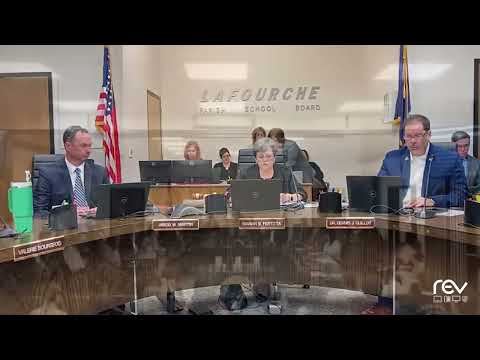
The Lafourche Parish School Board on Nov. 5, 2025 voted to uphold a superintendent disciplinary finding but to allow the affected student to return to school immediately under the remainder of a probationary period, after extended arguments over whether the administrative hearing had afforded the student's legal rights and whether school staff adequately responded when AI-generated sexualized images circulated among students.
The board opened the item under Louisiana Revised Statute 17:416(C)(4), and after hearing 20 minutes of argument from the student's attorney and a response from district representatives, members debated options ranging from suspension to upholding expulsion. The board ultimately adopted a motion to permit immediate return while preserving the remaining probationary conditions tied to the original disciplinary action; the motion passed by voice vote.
Why it matters: attorneys for the student told the board the student had been victimized by an image circulated among students, that school staff failed to separate the student from the alleged source and that the administrative hearing curtailed their ability to question witnesses. "She was victimized," the student's counsel said, arguing the prior hearing denied the family important avenues to obtain evidence and testimony. The district's representative said the administrative hearing followed required procedures and that the recommendation for expulsion was supported by the record. "The decision to recommend expulsion was supported by the findings," a district official told the board.
Board members repeatedly described the bus video shown at the administrative hearing as "sickening" and said the case raised hard questions about proportionality and how to respond when electronic images are created or spread among students. Several members said the board wanted the student back in class while still ensuring accountability and protecting other students.
Procedure and evidence: Board counsel explained the district's normal practice is to review the administrative transcript and evidence rather than hold a de novo rehearing; the board denied the student's request for a de novo hearing and for subpoenas, consistent with counsel's advice that the statute does not mandate a new evidentiary hearing. Members pressed staff on what evidence had been included in the record; the student’s attorney said screenshots and bus-camera material had been submitted at the administrative hearing, and urged the board to examine that material closely.
Penalty details and timeline: District staff summarized the typical disciplinary framework for non-drug expulsions: an 89-day expulsion with a return after roughly 45 days on probation. In this case staff said the student had passed the 45-day threshold while assigned to an alternative program and that the board could amend the superintendent's recommendation within the procedural limits of the statute. Members discussed practical ways to credit days served and to set a clear return date; they agreed that extracurricular participation could remain restricted while the disciplinary term remained in effect.
Next steps: Board members instructed staff to coordinate logistics for the student's potential return and communication with the school to avoid disruptions. The board also noted that, as standard practice, student disciplinary records are expunged after the school year in question.
What the record shows: The board's action reflected competing accounts in the meeting record — the student's counsel characterized the prior hearing as denying due process and emphasized the student's victimization and subsequent decline in academic standing, while district representatives maintained the hearing complied with procedure and that relevant evidence was available in the administrative record. The board's compromise—allowing immediate return while preserving probation—attempts to balance those competing concerns while remaining within the legal framework of the appeal statute.
The matter concluded with a voice vote that carried; the board moved on to the rest of the agenda.