Get Full Government Meeting Transcripts, Videos, & Alerts Forever!
Get email alerts on the Space Economy topic
No spam. Unsubscribe anytime.
Retired Gen. Lester Lyles urges Fairfax County to pursue space‑industry opportunities
Summary
Retired Air Force Gen. Lester Lyles, a Fairfax County resident and former chair of the NASA Advisory Council, said communities and companies should pursue supplier and innovation roles in the expanding space economy, citing the Artemis program and long‑term growth in space capabilities.
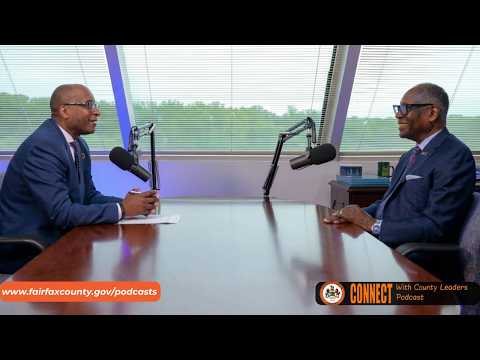
Retired Air Force Gen. Lester Lyles told Connect with County Leaders that Fairfax County can tap the expanding space economy to diversify its local economy and create supplier and innovation opportunities for businesses and universities.
"Well, the opportunities in space are very, very wide, and it's almost a target rich environment," Lyles said, describing a wide range of supply, technology and services roles that local companies could pursue.
Lyles spoke from experience: he has served on the NASA Advisory Council since 2005 and was its chair for the last decade. He said advisory work and the 2004 commission report he helped produce, titled "Moon, Mars and Beyond," advocated that companies and communities prepare to support national space goals by contributing technologies, engineering and services.
He described the Artemis program as the latest example of sustained government activity that creates demand across sectors. "There was a constellation program prior to that... [it] was resurrected in the form of the Artemis program," he said, adding that long‑running programs generate opportunities for suppliers large and small.
Lyles recommended that local jurisdictions and institutions focus on building STEM capacity and connections between industry and universities so firms can compete for subcontracts, research partnerships and workforce development. He cited his advisory role and years working on space vehicles and aircraft programs as background for that advice.
Though he framed the opportunity broadly, Lyles did not prescribe specific economic development measures for Fairfax County; instead he urged local leaders and businesses to assess where they can contribute technology, testing, manufacturing or services to national and commercial space projects.
Lyles lives in Vienna and said proximity to regional universities and transportation corridors makes Northern Virginia well‑positioned to participate, but he emphasized preparation: partnerships, workforce pipelines and local firms ready to meet technical requirements.
The interview ended with Lyles encouraging community engagement in STEM education and local efforts to connect businesses and research institutions to space‑sector opportunities.