Get Full Government Meeting Transcripts, Videos, & Alerts Forever!
Get email alerts on the Sweet Paws topic
No spam. Unsubscribe anytime.
Volunteer-run Sweet Paws describes strain as more local animals arrive; seeks food, meds and volunteers
Summary
Sweet Paws director Cynthia Sweet told What's Up, Groveland the foster-based rescue has about 350 volunteers and has shifted from sourcing animals primarily in the South to roughly 43–45% coming from Massachusetts, stressing higher local veterinary costs, evictions and dumped dogs are straining capacity; the group seeks donations, specific food and meds and volunteer help.
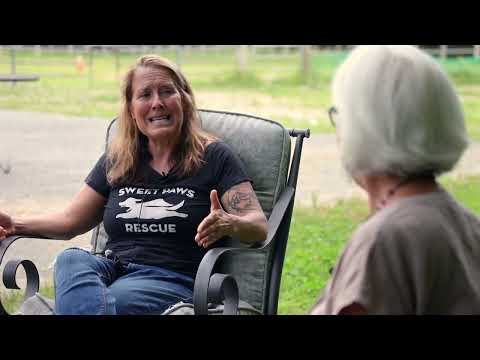
"We're not an animal shelter — we are foster based," said Cynthia Sweet in an on-air interview about Sweet Paws, the volunteer rescue operating out of a quarantine building in Groveland.
Sweet recounted that she began doing rescue work after Hurricane Katrina and that Sweet Paws, founded in 2011, has grown through volunteer commitment. She told reporter Elaine Tumazian Muse the organization relies on roughly 350 volunteers and has saved about 25,000 dogs and cats to date.
Sweet described a marked change in where animals are coming from: pre-COVID, she said, about 97 percent of animals the group placed came from Mississippi and Alabama and only 3 percent from Massachusetts. In the present period reported on-air, she estimated roughly 43–45 percent of dogs are originating in Massachusetts. Sweet cited rising veterinary costs, changes in pet policies by landlords leading to evictions, and an increase in dumped dogs as key drivers of the local caseload.
Financially, Sweet Paws relies heavily on adoption fees, she said, but Massachusetts veterinary care is often far more expensive than southern providers; she told the program that local vetting nine times out of ten can cost more than an adoption fee, creating a financial shortfall when helping in-state animals. She also described how corporate consolidation of veterinary clinics has raised prices.
Sweet outlined the organization’s operational choices: Sweet Paws is foster-based, holds orientations monthly, uses volunteer adoption coordinators and keeps a quarantine/kennel license in Groveland that gave the group operational flexibility they said they could not have obtained in nearby towns. She emphasized the need for volunteers with a range of skills — from driving and animal care to carpentry and HVAC — to keep the quarantine building and operations running.
How to help: Sweet gave an email contact, info@sweetpawsrescue.org, and said the most-needed donations are specific dog and cat food, flea/tick and heartworm medications, and financial contributions. She said volunteers and donated food are critical to ongoing operations.
The interview closed with Sweet describing the emotional rewards and strains of running a largely volunteer operation and her view that the rescue will pivot to help local animals even if financial difficulties increase.