Get Full Government Meeting Transcripts, Videos, & Alerts Forever!
Get email alerts on the Budget Millage topic
No spam. Unsubscribe anytime.
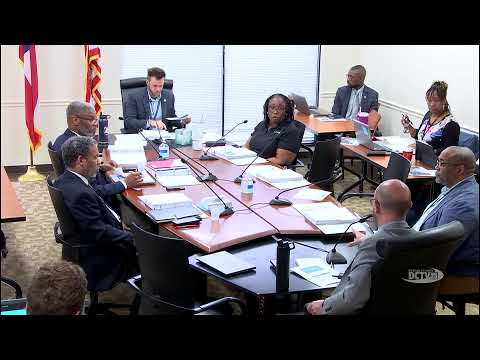
DeKalb committee reviews midyear budget shifts, approves substitute for ad valorem millage; housing and police funding highlighted
Summary
The FAB Committee reviewed FY26 millage rates and midyear budget revisions on July 6. Staff highlighted a $12 million housing investment, police funding increases tied to hiring and overtime ($9 million), an overall unincorporated rate increase of 0.5 mills, and a planned $10.8 million EHOS reserve distribution; the committee approved the substitute for item 10‑45.
DeKalb County officials on Monday walked commissioners through proposed FY26 millage rates and a series of midyear budget revisions that reallocate savings and address emerging revenue and service needs.
Director TJ Siegler said the largest single new investment in the midyear revisions is $12 million for housing — described as housing investment bonds and unhoused assistance — along with a number of health and workforce allocations. Siegler explained the proposed unincorporated operational millage rate totals 21.31 mills, a half-mill increase from last year. “The largest investment is in housing, which is $12,000,000,” Siegler told the committee.
Siegler said police funding is a key driver of the millage change: the county is increasing police budgets by roughly $9 million to cover additional hiring and overtime costs. He also noted audit adjustments reduced the starting fund balance from an expected roughly $130 million to about $118 million (an $11 million decrease), and staff showed proposed ending fund balances at about 1.4 months across funds with a long-term goal of four months for tax funds.
The presentation included homeowner impact examples: for an average $364,000 homestead property in unincorporated DeKalb, Siegler showed the millage change equates to roughly $69 a year before homeowner credits are applied; staff stressed that EHOS credits (tax-relief reserves used in 2025) affect net homeowner bills and that last year’s larger EHOS use made 2025 an outlier.
Commissioners asked for data on vacant positions, the salary study timetable, and more detail on how legacy capital balances were identified for sweep and reallocation. Siegler and CEO Williams said staff will provide updated lists of vacant positions and older capital accounts, and that a salary study is expected after the summer.
Before adjournment a substitute resolution for item 10‑45 (the ad valorem millage and budget revisions packet) was brought to the floor, moved by Commissioner Johnson, seconded by Commissioner Long Spears, and approved by voice vote. Chair Terry announced the motion carried. Staff said the substitute will include the school board’s millage resolution and correct a decimal typo; the substitute was approved by the committee.
Commissioners requested follow-up briefings and a midyear wrap-up in September to capture any remaining cleanup items, capital sweeps and allocation decisions prior to year-end.