Get Full Government Meeting Transcripts, Videos, & Alerts Forever!
Get email alerts on the Historic Preservation topic
No spam. Unsubscribe anytime.
Punta Gorda board debates converting advisory role, seeks updated registry after storm-driven losses
Summary
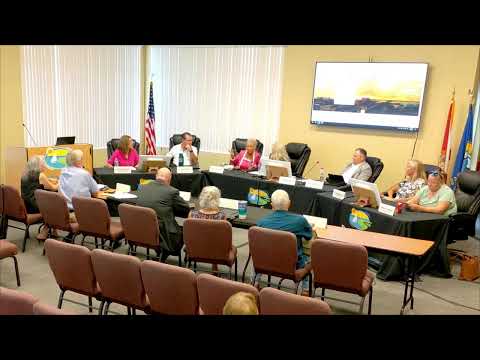
At a July 7 joint meeting, Punta Gorda City and its Historic Preservation Advisory Board discussed updating land-development rules to give the board regulatory weight, re-establishing a comprehensive contributing-structure list, and addressing homeowner concerns about FEMA's 50% repair rule that can limit restoration options.
PUNTA GORDA, Fla. — Members of Punta Gorda City and the Historic Preservation Advisory Board on July 7 pressed staff for a clearer, up-to-date inventory of historic properties and debated whether the city's preservation board should move from an advisory to a regulatory role under the land-development regulations (LDRs).
Board members said inaccurate or incomplete lists have complicated post-storm recovery and homeowner access to FEMA-related repair pathways. "We need an updated list of these contributing structures," a board member said, noting the Florida master site file and the city's local register contain discrepancies in counts and construction dates. Staff estimated there are about 400 locally-designated or state-listed properties when combined with the Florida Master Site File.
Why it matters: Several homeowners who lost roofs or were flooded after recent storms told the meeting they were blocked from repair programs or faced stricter FEMA thresholds after their properties were removed from the contributing-structure list. That status can affect whether FEMA's 50% repair rule applies, and board members said inconsistent notice to property owners added confusion.
Board members argued that changing LDR 15.4 language from "recommend" to "shall" would give the board more formal authority to make preservation decisions while leaving council as the final arbiter. "It carries a bit more weight," one member said of a regulatory approach, adding that legal review and careful drafting are necessary to preserve council's final decision-making role.
Legal counsel cautioned against the board initiating enforcement actions or publicly discussing specific, un-noticed properties. The city attorney's office explained that naming individual addresses at a meeting without prior notice could raise due-process and sunshine-law issues and suggested staff place lists on agendas and provide notice when specific properties will be discussed.
On data and process, zoning official Rachel Berry told the group the Florida Master Site File (MSF) is the state inventory but may not reflect local adoptions if forms weren't submitted. She said staff will supply the most recent MSF extract and the city's local register to the board so members can reconcile differences and pursue a re-adoption of the prior local list. Several board members supported re-adopting the earlier local register en masse and allowing owners to request removal, rather than handling one-off appeals.
Residents and several board members urged the city to pursue legislative and advocacy efforts over the FEMA 50% rule, which counts certain repair costs toward a 50% threshold that can require elevation or demolition. "The 50/50 rule is very disturbing to me," a council-affiliated member said; another suggested taking the issue to federal representatives and national organizations for FEMA reform.
Next steps: Staff committed to providing updated local and state registry lists and to working with the board on drafting LDR changes. The board and staff also agreed to coordinate documentation and public-notice procedures so property owners get clear, timely information about their status and options.
Quoted: "We need an updated list of these contributing structures," said a board member. "If staff doesn't have the time to do it, we can't do it because we're subject to sunshine," the same member added. Attorney Leskovich warned that "due process means that a homeowner or property owner has to be provided notice that their property is being subjected to discussion at some kind of open forum."
The joint meeting did not produce a final vote on LDR language; members said further drafting, legal review and public-notice planning are required.