Get Full Government Meeting Transcripts, Videos, & Alerts Forever!
Get email alerts on the Zoning topic
No spam. Unsubscribe anytime.
Roanoke City Council adopts data-center rules and other zoning changes, sets residential-density sections aside for further review
Summary
After hours of public comment, Roanoke City Council approved most zoning ordinance updates on July 6, 2026—including data-center regulations and new vape-shop rules—while removing residential-density provisions for separate consideration and referring them back to staff and the planning commission.
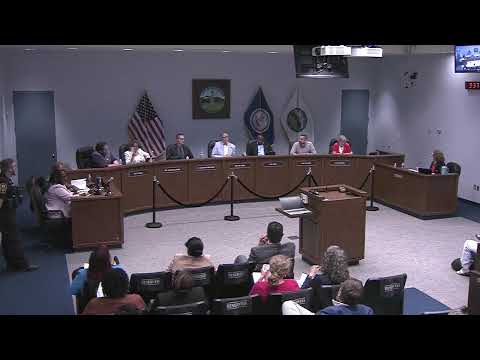
Roanoke City Council approved most of a sweeping package of zoning text amendments on July 6, 2026, adopting new rules for data centers, vape and tobacco retail locations, and several cleanup items while removing the residential-density provisions for separate consideration and further review.
The public hearing, continued from May 18, opened with a staff overview by Catherine Gray, who told the council the package aligns with the City Plan 2040 and that the planning commission had recommended approval by a 7–0 vote. "By a vote of 7–0, the planning commission recommends approval of the proposed zoning amendments," the staff presentation noted, and Gray answered council questions about definitions, temporary-stay language for clinics and unit counts created since the 2024 reforms.
Public comments split nearly evenly between those urging retention of the 2024 reforms and those who urged rollback or separate votes on specific items. Supporters of the reforms argued they create "missing-middle" housing options and reduce barriers to building duplexes and ADUs; opponents raised concerns about neighborhood character, parking requirements and the pace of change. Dr. Lauren Canary, a primary care physician, framed the issue in public-health terms, saying the city lacks housing and some patients are skipping medications because of housing costs. "We have the funding," Allison Jorgensen of the Council of Community Services said, "but one local provider has funding to house approximately 80 additional people—and they cannot identify units to place them in."
Council members spent substantial time parsing the ordinance and agreed to separate several items for distinct votes. First, the council removed the data-center supplemental regulations from the omnibus ordinance for separate consideration, then adopted the data-center language and related use-table changes in a separate roll-call vote. That action—cited by council members as an effort to put guardrails around large data-processing facilities—was approved unanimously by the seven members present.
Next, councilors moved to set aside the residential-density sections (including the dimensional and parking provisions identified in sections 36.2-205, 36.2-312 and 36.2-409.1) for separate consideration. The council voted to remove those density sections from the ordinance pending further review, then approved the remainder of the ordinance—covering vape/tobacco retail standards and a series of technical cleanups—by roll call.
After additional debate about how to proceed on the density questions, the council adopted an initiating resolution to refer selected matters (state-code cleanup, data-center language, and—after a contested amendment—the citizens group’s density proposal) back to planning staff and the planning commission for further review and public hearings. The motion to refer those topics passed after a divided roll-call vote.
Council members on both sides stressed the incremental nature of the process. Several members who supported the 2024 reforms argued the changes were already producing modest increases in missing-middle units and urged council not to reverse course; others said a compromise approach and further public review were warranted to rebuild community trust. Mayor Cobb closed the meeting after the initiating resolution passed and there being no further business.
Next steps: planning staff will take the referred items through the standard initiating-resolution process—additional public outreach, planning commission hearings and a return to council with recommendations—before the council considers any changes to the residential-density provisions.