Get Full Government Meeting Transcripts, Videos, & Alerts Forever!
Get email alerts on the Land Use Pud topic
No spam. Unsubscribe anytime.
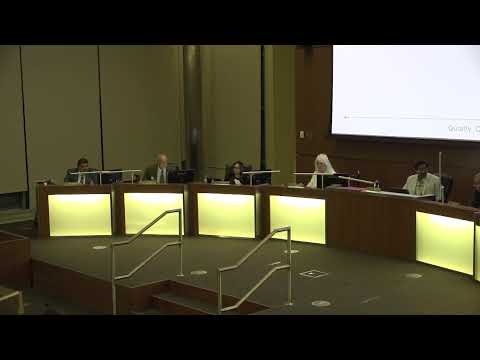
Commerce City council continues Hogan PUD hearing after residents press traffic, notice and water concerns
Summary
The council opened a public hearing on a PUD amendment that would convert about 16.82 acres near Chambers Road to a 227-unit ‘yard-home’ residential community, heard extended public opposition focused on traffic, notice and water during a drought, and voted 7–2 to continue the hearing to Sept. 21 for the applicant and staff to develop traffic and public-safety conditions.
Council members on Tuesday continued a contentious public hearing on a proposed amendment to the Hogan planned-unit development that would convert about 16.82 acres near 10230 Chambers Road and 15955 E. 101st Way to a ‘yard-home’ rental community.
The applicant, Urban Moment Development and design partner Norris Design, told the council their proposal would produce 227 units with open space and amenities and — according to the applicant’s traffic analysis — “roughly one quarter of the trips of the currently approved uses.” Yvette Tetreault, Urban Moment’s senior vice president and the project manager, said the product is a missing-middle, transitional housing type that fits the city’s comprehensive plan goals for the northern neighborhoods.
Neighbors and school officials urged caution. Dozens of residents who attended the hearing described limited mailed notice, heavy existing congestion on Chambers and nearby arterials, and concerns about water use and public safety. "Chambers Road cannot sustain such growth," resident Brenda Bergen said, asking the council to require a public hearing for administrative approvals and to scrutinize traffic studies and development agreements.
Stewart Middle School’s community liaison, Marissa Mink, told council members the campus already sees near-daily safety incidents and that adding traffic near school pick-up and drop-off raises safety risks. Greg Thompson, planning manager for School District 27J, said the district had been consulted, owns a 1.1-acre parcel adjacent to the site and that the district collects development impact fees and is adding capacity with new schools, but he did not suggest the project would be cost-free to district planning.
City staff recommended approval under the 2009 land development code, noting the proposal is consistent with the city’s northern-neighborhoods character area if treated as the hybrid product described by the applicant. Staff also emphasized that several intersection movements currently fail under existing conditions and that some additional queueing and signal timing issues will need mitigation as projects come online.
The Planning Commission previously recommended denial. Opponents pointed to that recommendation during public comment and at the dais, urging the council either to deny the amendment or to require binding mitigation before approval. Tom Kaufman, a land broker for Land Advisors, told the council commercial demand for the site has been limited and that residential use is market-feasible, while others said that losing commercially zoned land would hinder long-term retail prospects for the area.
Councilmembers debated the approval criteria at length, with several citing the land-development code’s requirement that a rezoning/density change maintain adequate public safety, transportation and utility levels to serve the site and existing development. Councilmember Kim said the traffic study “lays out numbers that should concern every one of us” and that the council must not approve a plan that would knowingly degrade levels of service.
Councilmember Teeter moved to approve the PUD amendment as presented, but the motion was withdrawn amid objections and calls for more work on traffic and public-safety conditions. Councilmember Dukes then moved to continue the hearing to Sept. 21 to allow the applicant and staff to prepare enforceable, council-acceptable conditions that address traffic and safety; the motion passed 7–2. The applicant said it was willing to work with staff to explore binding items.
Next steps: the council continued the public hearing to Sept. 21, 2026, directing staff and the applicant to develop specific, implementable conditions—particularly on traffic mitigation and public safety—before the council reconvenes the matter.