Get Full Government Meeting Transcripts, Videos, & Alerts Forever!
Get email alerts on the Sober Living Residences topic
No spam. Unsubscribe anytime.
Elmwood Park residents press council over sober‑living homes; council forms review committee
Summary
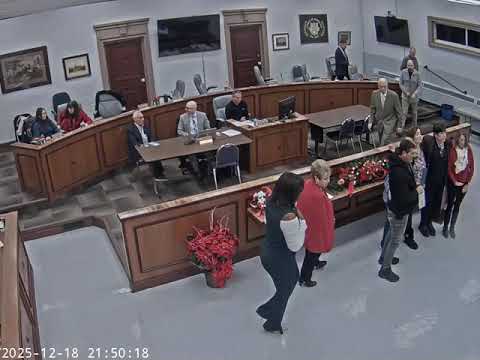
Dozens of residents spoke at the Dec. 18 Elmwood Park council meeting about cooperative sober‑living residences near schools, prompting the council to move to form a committee to study local ordinances, spacing buffers and enforcement options while the state remains the primary licensor.
Dozens of residents pressed Elmwood Park officials on Dec. 18 over the placement and oversight of cooperative sober‑living residences, saying one proposed home at 58 Miller Avenue sits steps from a preschool and creates foreseeable safety and property‑value concerns. The council agreed to form a committee to study local options for regulating location and density.
At the start of the public comment period, resident Sharon Coaches (52 Miller Ave) said she had documented incidents over six weeks and urged officials to act to “protect our children,” asserting the sober‑living property was “50 feet from a state‑licensed preschool” and alleging the residence lacked proper documentation and inspections. Coaches said state inspections and licensing alone had not prevented prior neighborhood tragedies and called for local zoning review, parking analysis and safety evaluations.
The borough attorney told the assembled residents that cooperative sober‑living residences hold a Class F license governed by state law and rules administered by the New Jersey Department of Community Affairs (DCA). The attorney said operators apply to the state, which inspects and enforces licensure; municipalities do not select sites for these licenses and state rules do not impose automatic distance restrictions from schools. He also noted that federal Fair Housing protections and state law affect local authority.
Operators and residents in recovery responded in the meeting. DB House operator Mark Manani said his homes undergo annual inspections, that licenses are posted, and that the DCA enforces occupancy and program rules. “Nothing is above board that’s done there,” he told the council, adding the houses he operates have low first‑responder call counts and that residents pay rent and work. A resident who said he lives at 58 Miller called the house “a beautiful home” and said the goal is to help people reintegrate.
Several public speakers urged the council to pursue a local ordinance introducing reasonable spacing requirements and school buffers — for example, a 1,000‑foot minimum between sober homes and between homes and schools — pointing to other New Jersey municipalities that have adopted such rules. Steven Kosovich (speaking on behalf of his mother) asked the council to require proof of Class F licenses be filed with the township clerk so the borough can verify compliance and track state inspection schedules.
Councilman Fasolo moved to create a committee to review ordinances adopted by other towns and produce recommendations; Council President Lorraine Pellegreen seconded. Members discussed timing and whether to finalize membership in January at the borough’s reorganization meeting; the borough attorney cautioned that any ad‑hoc committee formed before reorganization will lapse at that event and suggested formalizing the committee at reorganization. Council indicated it would seek community representation on the committee.
The meeting contained sustained, sometimes emotional exchanges: residents recounted neighborhood impacts and asked the council to assert more local oversight where permitted; operators and recovery residents urged the council not to stigmatize people in recovery and described recovery outcomes tied to sober homes. The public portion closed and the council entered executive session to consider attorney‑client matters.
What happens next: Council members agreed to pursue formation of a sober‑living review committee and to return with a formal charge and membership at or after the January reorganization meeting. Any formal ordinance would require subsequent committee recommendations, public hearings and council votes.