Get Full Government Meeting Transcripts, Videos, & Alerts Forever!
Get email alerts on the Federal Personnel And Budget topic
No spam. Unsubscribe anytime.
Congressman warns of federal workforce redesignation, urges advocacy and legal aid
Summary
U.S. Rep. Glenn Ivy told the Montgomery County House Delegation that proposed federal personnel redesignations and buyout offers threaten employee rights and that litigation — led by unions and groups like Democracy Forward — has so far won injunctions; he urged constituents to contact district offices and unions for help.
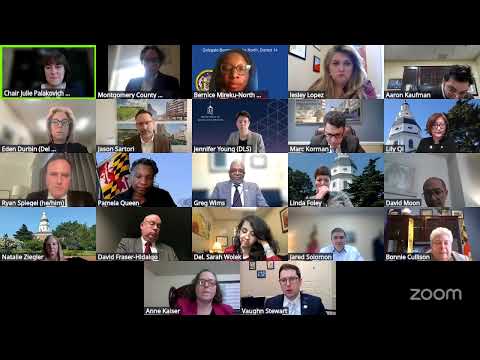
U.S. Rep. Glenn Ivy told the Montgomery County House Delegation on Feb. 7 that proposals to reclassify federal workers and related personnel actions have amounted to “an attack on government employees” and are prompting widespread legal pushback.
"The attack on government employees has just been horrific," Ivy said, describing proposals to redesignate personnel and to offer buyouts that could leave employees with reduced rights. He said unions, advocacy groups and individual attorneys have mounted roughly 30 lawsuits and that courts have frequently granted injunctions, slowing implementation.
Ivy urged constituents who face adverse personnel actions to contact their congressional district office as a first step and recommended unions and advocacy organizations — naming Democracy Forward as an active coordinator of litigation and resources. "Contacting them makes a lot of sense," he said, adding that private counsel can also help where feasible.
Delegates asked what resources to point constituents toward. Ivy said unions can provide department‑specific guidance and that his office and district staff can assist with individual cases. He warned that buyout programs raise difficult enforceability and funding questions and advised caution: "If somebody did do it, though, and ... wants to change their mind, my thought ... they should try and rescind their resignation," he said, noting counsel should be consulted.
On broader federal policy, Ivy said the current administration appears likely to pursue large spending cuts and to seek revenue to fund tax‑cut proposals, which could put federal grants and programs that counties rely on at risk. He flagged programs such as Title I education funding, Meals on Wheels and childcare supports as potential targets and urged local stakeholders to contact members representing areas that benefit from those programs.
Ivy closed by acknowledging the difficult budget and appropriations picture in Congress but said the combination of court challenges and political dynamics gives some hope that broad redesignations and unilateral personnel changes can be checked.
The delegation did not take a formal vote on federal issues; Ivy answered questions and encouraged continued constituent outreach to unions, advocacy groups and congressional offices.