Get Full Government Meeting Transcripts, Videos, & Alerts Forever!
Get email alerts on the Land Use topic
No spam. Unsubscribe anytime.
Swatara commissioners vote to advertise data-center zoning ordinance after long public-comment period
Summary
After hours of public comment about noise, backup generators and siting near schools, the Swatara Township Board authorized advertisement of a zoning amendment to regulate data centers and clarified noise limits; planning commission review is set for July 14 and a public hearing for Aug. 5.
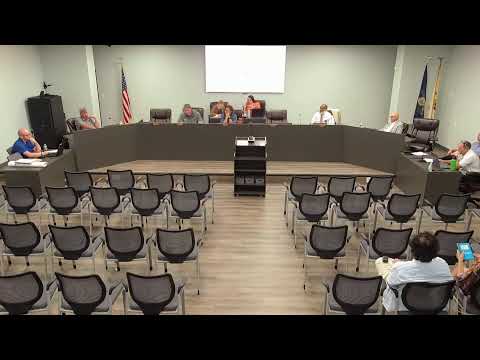
Swatara Township commissioners voted July 1 to advertise a zoning-text amendment that would add rules for data centers to the township’s subdivision and land-development ordinance, after a lengthy public comment period in which residents raised concerns about noise, backup generators, decommissioning and proximity to schools.
Director Gordon, the township’s buildings and codes director, recommended moving the draft ordinance forward so the township would have standards in place before any land-development plan is submitted. Commissioners approved advertising the ordinance for a public hearing and potential adoption on Aug. 5, with the planning commission scheduled to review the draft on July 14.
Many residents urged stronger protections before the measure moves forward. John Werner, a Carlisle resident whose parents live near a data-center project in Middlesex, said the Middlesex experience showed how disruptive a large facility can be and recommended environmental-model ordinances as references. “I genuinely appreciate the situation that you guys are in trying to get ahead of this,” Werner said, adding that Middlesex has experienced acrimony over construction, air pollution and blasting.
Several public speakers raised health and equity concerns about backup generators and emissions. A Swatara resident who opposed the project said schools lie within a few hundred yards of proposed buildings and warned that diesel generators could worsen asthma among local students. An agency-affiliated commenter noted that emissions and hours of operation from generators are regulated at the state level and that DEP can limit hours and pounds of emissions; township staff confirmed that the draft ordinance restricts generator use to emergency backup only and limits routine testing times.
Residents also asked whether the ordinance defines “emergency” and limits generator runtime. Sarah Pinter of Harrisburg said the ordinance’s lack of a clear emergency definition could allow extended generator use during grid events; planning staff and legal counsel said the ordinance defines backup generators as devices that generate electricity during a power outage or similar emergency and that testing is limited to prescribed daytime hours, while acknowledging that regional entities such as PJM and state regulators have a role in grid-level events.
The board clarified numeric noise limits to match the Tri-County model: maximum A-weighted (DBA) and C-weighted (DBC) levels tied to daytime and nighttime hours. Commissioners emphasized that the draft is not final: text amendments can be made after advertising and the planning commission and county review will provide additional opportunities for comment.
Director Gordon said the township is seeking a balance between robust protections and legal defensibility. “If we wait until it’s perfect, we risk having no ordinance at all when an application arrives,” he said, noting the township has been sued in the past over land-development decisions.
The board approved advertising the ordinance by voice vote; the motion was moved and seconded during the meeting and carried. Planning commission comment and the August public hearing will be the next formal opportunities for residents and stakeholders to seek changes.
What’s next: the planning commission will review the ordinance on July 14; the board will hold the advertised public hearing on Aug. 5 with possible adoption afterward.