Get Full Government Meeting Transcripts, Videos, & Alerts Forever!
Get email alerts on the Education topic
No spam. Unsubscribe anytime.
Committee hears push to speed up 'science of reading' rollout; witnesses warn of weak vetting and costs
Summary
The House Education and Workforce Committee heard testimony on three bills to accelerate implementation of 'science of reading' instruction and to require K–5 schools to use a capped list of state‑approved curricula; supporters stressed urgency, while witnesses and members pressed for more evidence, cost data, and clearer vetting.
Representative Schmaltz urged the House Education and Workforce Committee to move the implementation date for 'science of reading' instruction forward, saying Michigan's low reading outcomes require urgency. "Early literacy is the foundation for future academic success," Schmaltz told the committee, and she proposed moving the implementation date from July 1, 2027 to July 1, 2026.
The proposal (HB 58‑19) was one of three related bills the panel considered in testimony that focused on timelines, teacher preparation and curriculum standards. Vice Chair Linting, sponsor of HB 58‑21, said the bill would require K–5 schools to use evidence‑based, Department‑approved curricula and would cap that state list at 15 programs to avoid a patchwork of materials across districts. "Currently, the Department of Education has published 14 approved curriculums," Linting said; she said 15 gives flexibility while limiting fragmentation.
Committee members repeatedly asked whether accelerating enforcement and mandating a shorter list might create implementation problems for districts and teacher‑preparation programs. Representative Weiss pressed sponsors on whether the committee risked "rushing" districts and whether smaller or under‑resourced districts would be able to meet the earlier date. Schmaltz replied the change "is not about punishing anybody" and that training has already been underway since the policy was approved previously.
Representative Jamie Greene, sponsor of HB 58‑20, said her bill would move the teacher‑preparation timeline up to July 1, 2026 and that many districts have already begun training. Greene acknowledged she had spoken with some districts and literacy coaches but said she had not surveyed teacher‑preparation programs statewide about feasibility.
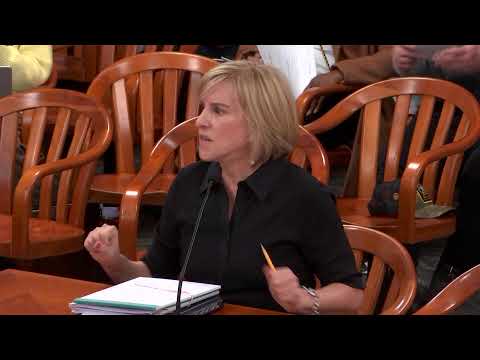
Dr. Carrie Krantz, an education leader with decades of district experience, urged caution. She testified that the state's vetting of the 14 approved curricular materials had not been sufficiently rigorous and argued that some programs lacked independent, scientific evidence of effectiveness. "I'm raising some flags to suggest a pause and a further conversation," Krantz said, adding that she was concerned about what she described as a narrow definition of the science of reading and the possible sidelining of comprehension and higher‑order literacy skills.
Krantz also told the committee she understood the state had allocated $87,000,000 to help districts purchase materials on the approved list and warned members to scrutinize both the evidence base and the money flows behind vendors and screening organizations. Committee members pressed Krantz for details; she named programs she had concerns about, including LETRS and some widely adopted curricular packages, and said many vendor reports were case studies rather than independent trials.
Members asked where the Department's approved list is published and whether vendors on the list include Orton‑Gillingham or LETRS; sponsors said the list comes from the state Department of Education and that fiscal analyses of costs per district were not available at the hearing. Representatives called for continued work with stakeholders, more data on district readiness, and clearer fiscal estimates before the committee moved toward formal action.
No committee votes were taken on the bills during the hearing. The committee read supporting witness cards from business and education groups and concluded testimony on the reading‑related bills.
The committee will take no formal action today; sponsors and members indicated further work and fiscal review before votes would be scheduled.