Get Full Government Meeting Transcripts, Videos, & Alerts Forever!
Get email alerts on the Zoning Last Mile Delivery topic
No spam. Unsubscribe anytime.
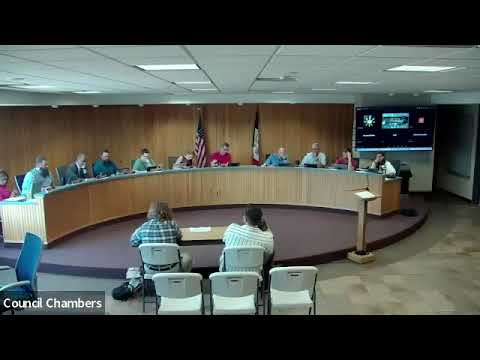
Decorah council tightens last‑mile delivery rules, restricts parking in public lots
Summary
After lengthy debate over safety and downtown impacts, the Decorah City Council amended a draft last‑mile delivery ordinance to limit conditional use permits to four holders, forbid delivery vehicles from parking on public streets or publicly owned parking lots (with alley exceptions), and require off‑street access for hubs.
The Decorah City Council on Monday amended a proposed ordinance regulating 'last‑mile' delivery facilities in commercial districts, narrowing the number of conditional use permits and restricting where delivery vehicles may park.
Steve (speaker 13) moved the main change, which reduced the number of conditional use permit (CUP) holders in the C‑3 district from five to four and replaced subsection e to prohibit delivery vehicles associated with last‑mile hubs from parking on public streets or in publicly owned parking lots, while allowing access via alleys. "Delivery vehicles associated with a last‑mile delivery hub may not park on public streets or in publicly owned parking lots," Steve said as he summarized the proposed revision.
Council members and staff debated whether to allow private off‑street parking only, or to permit public off‑street lots in some cases. Concerns focused on the two downtown municipal lots (Mill and River) where steep grades and limited ADA access could make truck parking unsafe or obstructive; one council member said those lots "aren't ADA accessible" and urged excluding them from permitted parking.
Staff clarified the draft makes last‑mile hubs allowable in C‑3 only as a conditional use tied to another permitted principal use, not as a standalone primary business. The ordinance also contains application requirements for ingress, egress and parking that the board of adjustment must evaluate and gives the city manager authority to revoke permits if operators do not follow approved conditions.
After debate and a straw poll on public‑lot use, the council adopted the amended draft on a 6–1 vote. Chisel voted against the motion.
The revised ordinance will go to the planning and zoning commission and the board of adjustment processes for permit applications; staff said enforcement tools and renewal windows are intended to protect downtown businesses and pedestrian safety.