Get Full Government Meeting Transcripts, Videos, & Alerts Forever!
Get email alerts on the School Budget topic
No spam. Unsubscribe anytime.
School leaders present budget preview as state aid, grant funding remain uncertain
Summary
District leaders gave a budget workshop that outlined strategic goals and early fiscal projections showing flat state aid but possible cuts to federal grants, rising health and utility costs, and planned collective-bargaining negotiations; board members pressed to preserve staff and facilities while awaiting firmer February numbers.
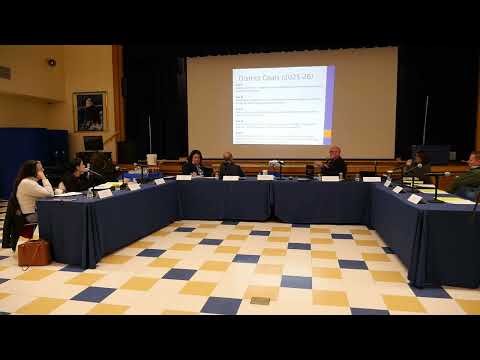
Dr. Ryder, who led the budget workshop, told the Hardyston Township Board of Education that the district is beginning the 2025–26 budget process by re‑anchoring proposals to the strategic goals set in 2022 and the district’s five priorities: academic excellence; attendance and engagement; family and community partnership; positive school culture and staff collaboration; and maintenance and technology.
“Goal number 1: individual students and accountability — to create an environment that provides opportunities and enables students to take ownership of their learning,” Dr. Ryder said as he outlined how those goals will shape budget choices. He urged the board to use the next month to refine projections and return with feedback at the February workshop.
Administrators presented early financial signals: business-office projections show flat state aid but warned of possible reductions in Title and IDEA grants (administrators described scenarios in which some grants could be reduced to about 75% of current funding). The presentation included an illustrative explanation of the 2% local tax‑levy cap using the user-friendly budget total of $11,000,002.97; a 2% levy increase would create roughly $226,000 of local revenue capacity, the presenter said.
Healthcare and utilities were identified as significant cost drivers. The business office reported sharp increases in insurance premiums and monthly utility bills; one example noted winter utility bills rising from about $10,000 to $14,000 for a single building compared with the prior year. Transportation contracts were described as tied to the Consumer Price Index, with administrators budgeting conservatively while awaiting firm broker figures.
Board members emphasized a priority of maintaining current staff and programs. One member urged caution: “My desire is to maintain status quo knowing that these increases are there,” the member said, asking administrators to look for offsets and to present detailed numbers at the February meeting. Administrators confirmed collective‑bargaining talks will begin within the month and that salary and benefits negotiations will materially influence the final budget.
The presentation also highlighted district progress that helps the bottom line: a reduction in charter‑school tuition outflows as more students remain in district schools; administrators noted earlier years when charter tuition costs exceeded roughly $250,000 and said lower charter enrollment has produced meaningful savings.
Next steps: administrators will gather updated figures from county and state sources and return to the board in February with more concrete scenarios (best/worst cases) once the governor’s address and state aid figures are finalized. The board directed staff to continue committee‑level discussions on line‑item impacts and to prepare more detailed breakout charts for February.