Get Full Government Meeting Transcripts, Videos, & Alerts Forever!
Get email alerts on the Land Use Development topic
No spam. Unsubscribe anytime.
Neighbors win reprieve as council denies Covington Square development-agreement change
Summary
After hours of testimony, the council denied a developer's request to amend a 2019 development agreement for Covington Square, leaving the original annexation protections intact and sending the developer back to the drawing board if it wants to replat under current code.
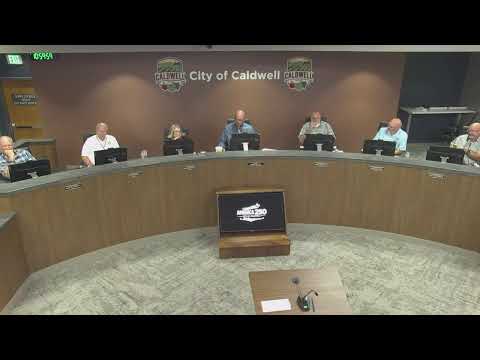
The Caldwell City Council on July 6 denied a developer's request to modify the development agreement for the Covington Square property in western Caldwell, a contentious decision that followed several hours of public testimony and a legal debate over whether the council could lawfully reshape the contract that accompanied the original annexation.
BST Dev LLC (SI Construction) had asked to replace the 2019 entitlement for 29 lots with a new preliminary plat for 48 single-family lots (roughly 3.2 units per acre). The applicant's attorney, Jeff Bauer, told the council the revised plan fits the city's current Neighborhood 2 place-type density range and that staff review recommended approval with conditions. The applicant said it had reduced an earlier 70-unit proposal to 48 lots in response to community feedback and promised improvements including widened Doorman half-street dedication, sidewalks and open space.
Neighbors and two property owners'counsel argued the 2019 annexation agreement encumbered the land and that the original plat's entitlements should be honored. Speakers cited infrastructure, traffic-safety concerns on Dorman (a largely local road that functions as a collector), potential water-pressure impacts and the loss of the neighborhood character created by denser lots. Several residents asked the council to remand the matter to staff for mediation; neighbors' counsel said they had requested mediation but the applicant was not interested in formal mediation prior to the hearing.
After a period of deliberation and a closed executive session for legal advice, the council took a motion to approve the development agreement modification; the vote tied and the presiding official cast a deciding vote against approval. A subsequent motion to deny the modification carried, and the council noted that the original development agreement remains in force. Staff told neighbors and the council that if the modification is denied, the original DA continues, but no current preliminary plat exists and any future replatting will have to comply with the current comp plan and code unless the council chooses otherwise.
Councilors acknowledged legal complexity: the applicant argued denial would be difficult to justify under Idaho's land-use authority (LUPA) without a rational basis; neighbors' counsel stressed contractual rights and potential deprivation of settled expectations. The council's denial does not itself grant a new plat; it preserves current DA protections and leaves options for the applicant to reapply or for council to set other conditions in future proceedings.
The denial resolves an immediate neighborhood dispute in favor of the residents who testified, but the property's future remains unsettled: the developer can reapply under current rules or seek other negotiated solutions with neighbors and staff.