Get Full Government Meeting Transcripts, Videos, & Alerts Forever!
Get email alerts on the Senior Tax Freeze topic
No spam. Unsubscribe anytime.
Cooper County officials outline one-time application, deadlines for new senior homestead tax freeze
Summary
Cooper County presenters explained a new senior homestead tax-freeze ordinance, saying the program requires a one-time application for residents age 62 and older, the base year is 2024, and applications will be accepted Jan. 1 through Sept. 15; clerks, the assessor and collector will verify eligibility.
Cooper County officials on Tuesday explained how residents can apply for a new senior homestead tax freeze created under recent state legislation, urging eligible residents to submit a one-time application so they can receive the credit starting in 2024.
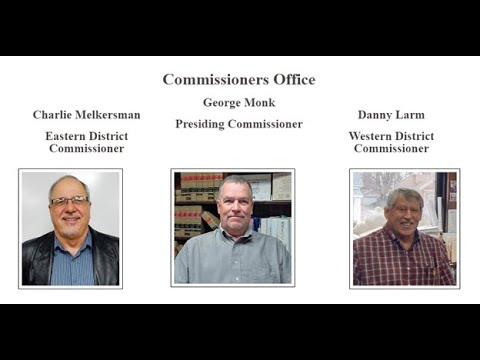
Mr. Monk, representing Cooper County, said the outreach meetings aim to ensure seniors understand the program and the application requirement. “It is a voluntary process,” he said, adding that “we're making this a one-time application” to reduce burdens on older residents who might otherwise have to reapply annually.
County presenters traced the change to two pieces of state legislation. They said Senate Bill 190 (2023) used vague language on eligibility and taxing subdivisions, which created legal and administrative confusion; state and county officials supported later clarifying language in what they described as Senate Bill 756. County staff drafted an ordinance to implement the clarified law and put it into effect after the governor signed the changes, the presenters said.
Why it matters: the freeze applies only to a homestead (the primary residence), attaches to the household based on the county's 2024 base year and is intended to limit property tax increases for eligible seniors. Officials said routine assessments (conducted in odd years) and property improvements can raise assessed value, and the tax credit reflects the difference between the base-year assessment and later assessments.
Officials gave practical guidance for applicants. The county will require a parcel/PIN (from the assessor's GIS/property report card), proof of identity and age, proof of residency and proof of ownership (or a trust document if the property is held in trust). Trust documents will be copied and stored in the clerk's secured vault; staff said they will redact unrelated pages before sharing records with other offices. “The clerk's office is the recorder of information, and they can secure this better than any of the offices,” a presenter said.
Timing and scale: presenters said applications may not be received earlier than Jan. 1 and that the county plans to accept applications through Sept. 15 of the application year. Cooper County officials described 2024 as the program's base year. They estimated about 19% of the county's roughly 17,000 residents are age 62 or older but cautioned that not all are homeowners or otherwise eligible; the presenters estimated a likely applicant pool on the order of 1,000–3,000 people. Officials also flagged potential fiscal impacts for local schools, which comprise a major portion of affected taxing entities.
Edge cases and administration: staff discussed special situations — for example, when a homeowner moves into a nursing facility but still maintains a residence or when a property is rented — and said eligibility will be determined case-by-case. County staff explained the verification workflow: applicants submit to the clerk, the clerk validates and secures documents, the assessor confirms parcel and ownership details, and the collector applies the tax credit.
Legal and procedural risk: presenters said citizen petitions could still override a local ordinance if petitioners meet the statutory threshold, so they carefully drafted ordinance language to reduce vulnerability to a petition challenge. They also noted an incoming assessor change and urged coordination among elected offices to ensure accurate implementation.
What comes next: county officials urged residents and volunteers to collect and deliver completed applications and offered phone support for people who need help filling forms. No vote or additional formal action on the ordinance was recorded during the session; presenters described the ordinance as already placed in effect after the governor's signature and said staff will continue outreach and intake operations.