Get Full Government Meeting Transcripts, Videos, & Alerts Forever!
Get email alerts on the Telecom Site Subdivision topic
No spam. Unsubscribe anytime.
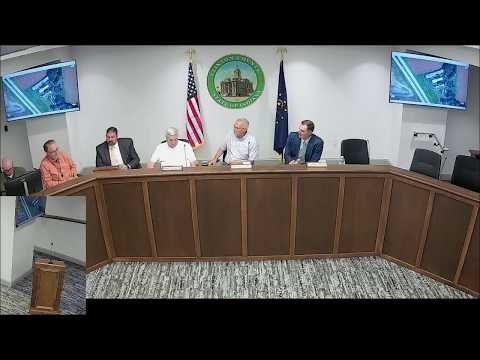
Clinton County drainage board clears way for AT&T site, but requires hog‑barn roof and debris removed first
Summary
The Clinton County Drainage Board granted conditional drainage approval July 7 that allows an AT&T-linked subdivision application to proceed to BZA and the plan commission provided the dilapidated hog barn roof and above‑grade debris are removed before the drainage board's next meeting; the concrete pit remains subject to state review.
The Clinton County Drainage Board on July 7 granted conditional drainage approval for a proposed subdivision tied to an AT&T route site, but required that the removal of the hog barn’s roof structure and above‑grade debris be completed before the board’s next meeting.
"We just want to see level dirt," the Chair (speaker 5) said during the exchange, describing the county’s threshold for the board to advance the drainage approval while leaving any state‑level pit closure or remediation to IDEM and the health department. The board and staff emphasized that burial of materials or removal of concrete pit components depends on environmental and state approvals.
Adam Stewart (speaker 1), the AT&T representative handling the site, told the board the company has been delayed about 60 days and needs a definite site so its route engineering can proceed. "We want to be on your team... but we cannot be delayed any further in our project," Stewart said, pressing the board for a clear, time‑bound condition. JB Overmeyer (speaker 7), an AT&T consultant, explained the site selection affects the route design between Chicago and Indianapolis.
County planning staff and the planning director (speaker 8, introduced at the meeting as the Perry Plan director) recommended practical options the board could use to secure cleanup work while letting the review process continue, including escrowed funds or a performance bond. The director said accepting a financial guarantee—commonly around 125% of an estimate—would let the county act if the owner fails to complete agreed work.
Board members described a staging path to avoid blocking the applicant’s procedural timeline: the BZA meets July 28 and, if the applicant files promptly, the plan commission could hear the subdivision in September. The board agreed to grant drainage approval to allow the BZA filing on the condition that the roof and wall debris are removed by the board’s next meeting and that the concrete pit remain subject to state pit‑closure requirements.
The board discussed enforcement options if the owner fails to comply, including condemnation at the commissioners level, and instructed staff to draft any escrow or bond language so county counsel can review it prior to related hearings. The board did not record a roll‑call vote tally for the conditional approval in the transcript.