Get Full Government Meeting Transcripts, Videos, & Alerts Forever!
Get email alerts on the Rv Ordinance topic
No spam. Unsubscribe anytime.
Council tables major rewrite of RV ordinance after residents, council raise enforcement and equity concerns
Summary
After hours of public comment and council questions about limits, grandfathering, disability accommodations and enforcement, the Town of Loxahatchee Groves tabled proposed changes to its recreational-vehicle rules for a July 21 workshop so staff can provide data and revised language.
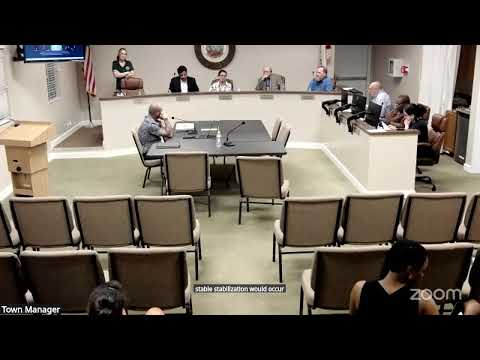
The Town of Loxahatchee Groves on July 7 delayed final action on a wide-ranging rewrite of its recreational-vehicle (RV) rules after residents and several council members said the current draft raises practical, legal and equity problems.
The council opened a public hearing on Ordinance 2026-01, a second-reading proposal to repeal and replace the town’s RV provisions in the Unified Land Development Code. Speakers included farmers, nursery operators and new Planning & Zoning committee members who called for clearer definitions, predictable grandfathering and care for equestrian operations.
“State statute says no more than four,” a public commenter pointed out when discussing proposed limits by tract size, and others warned that limiting seasonal RV use would hurt agricultural operators who rely on temporary on-site housing during show and competition seasons. Planner James Borsos urged the council to contain the rules with site-specific conditions, such as screening and buffers, to keep commercial operations from becoming industrialized.
Council debate focused on several repeated concerns: whether owners who already complied earlier should be ‘grandfathered,’ how many occupied RVs a parcel may host, whether collecting occupants’ ID information or running background checks is feasible for staff, and whether the draft would unintentionally permit short-term rentals akin to Airbnb. Vice Mayor Sood framed a broader value question: “We are a rural, pristine, equestrian, family friendly town. We are not an RV park,” he said, urging careful limits to preserve the town’s character.
Town attorney Jeff Kurtz and staff answered legal and administrative questions during the discussion. Staff confirmed the draft tracks some ULDC recommendations and that disability accommodation language could allow year‑round occupancy for people with qualifying disabilities, while other uses would remain limited to shorter periods.
Given the number of unresolved policy choices, the council voted to table the ordinance and direct staff to prepare a more detailed packet — including data on current permits, proposed grandfathering language and suggested timelines — for a July 21 workshop. The council approved that motion unanimously.
Next steps: staff will return with revised ordinance text, example grandfathering language and data on existing RV permits and enforcement history at the July 21 workshop, with the intent of scheduling a first reading in August and a second reading in September if changes are substantial.