Get Full Government Meeting Transcripts, Videos, & Alerts Forever!
Get email alerts on the Domestic Violence Court Process topic
No spam. Unsubscribe anytime.
Billings judges outline how orders of protection and family-court records can help survivors, urge better support for pro se litigants
Summary
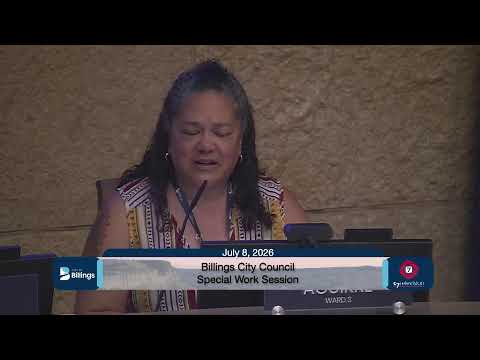
At a Billings City Council session, district judges explained how orders of protection, parenting-plan findings and certain rule changes can help domestic-violence survivors — especially those representing themselves — and urged better outreach and preparation by advocates and service providers.
Chief District Judge Brett Linweber and fellow judges told the Billings City Council that many protections available to domestic-violence survivors are underused because victims and pro se litigants often arrive at hearings unprepared. Linweber urged survivors and advocates to bring printed evidence — photos, phone logs, messages — and to use scheduling conferences to clarify what the judge will consider.
"These matters have to be set within 20 days," Judge Brett Linweber said, describing the timing and criteria for orders of protection and emphasizing that such orders can be a meaningful legal tool, not "just a piece of paper." He added that courts evaluate whether an order is necessary to prevent further harm and that judges do not automatically have access to police records.
The judges highlighted a rule change affecting family-law hearings in district court: beginning October 2023, Uniform District Court Rule 17 permits broader consideration of hearsay evidence in some pro se family-law matters, Linweber said, but judges still assess credibility. "The court just has to evaluate it on, is this credible or not?" he said.
Judges Kohler and Heller concurred, describing common courtroom procedures that protect victims' safety, such as sealing orders of protection and offering Zoom appearances when petitioners request to avoid facing their accusers in person. Kohler noted that many judges routinely set scheduling conferences to explain evidentiary needs, and Heller said she often offers continuances when petitioners need time to gather documentation.
Council members asked detailed questions about access to police reports, GPS monitoring and whether jail capacity affects sentencing. Linweber repeatedly said judges do not let jail crowding determine punishments for violent crimes: "I will never take into account... the jail's full," he told council members, adding that sentencing is based on statutory criteria, aggravating and mitigating factors.
The judges urged closer coordination among advocates, prosecutors and service providers to help survivors prepare for court: timely access to evidence, tailored scheduling conferences and clear front-end information can increase survivors' chances of securing protective orders and other relief. The judges also offered to remain available for follow-up questions as the council works with community partners.