Get Full Government Meeting Transcripts, Videos, & Alerts Forever!
Get email alerts on the Transit Funding topic
No spam. Unsubscribe anytime.
Transit study says short‑term city control; long‑term option is multi‑jurisdiction transportation district
Summary
MET transit staff told the council a new study shows a city‑run model is the most feasible near term while a multi‑jurisdictional urban transportation district could provide predictable funding if Billings’ urbanized area expands. The study flags a projected 2027 operating shortfall and outlines revenue options including CMAQ and property taxes.
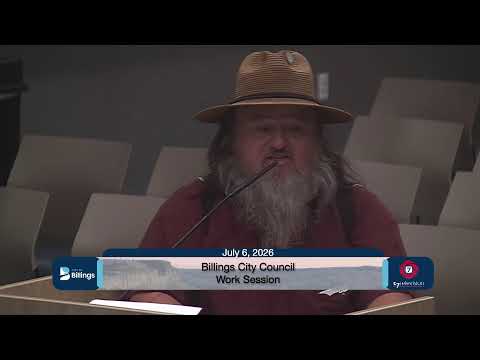
Rusty, MET transit director, told the Billings City Council on July 6 that a recently completed transit funding, sustainability and governance study shows the system faces a meaningful operating shortfall in 2027 and that short‑term continuity is best served by maintaining MET as a city department while preparing for broader regional governance if the urbanized area expands.
The study, presented at the council meeting, examined three governance concepts: (1) continue as a city department, (1b) a city operator contracting or absorbing other local services if urbanized areas combine, and (2) formation of a multi‑jurisdictional urban transportation district (UTD). "We are looking into a significant operating shortfall, which is requiring the use of reserves," Rusty said, summarizing the funding pressure that prompted the study.
Why it matters: federal transit apportionments and many grant formulas are tied to an area's designated urbanized boundary. The study warns that growth or a future U.S. Census designation that folds nearby Laurel into the Billings urbanized area would change which agencies are eligible for federal funds and could require MET to oversee additional subrecipients and compliance obligations.
Study findings and recommendations: the consultant team and MET staff concluded the most straightforward short‑term approach is to maintain MET as a city department while negotiating interlocal agreements and preparing policies that smooth a transition if the urbanized areas combine. For the long term the study favors a multijurisdictional UTD because it can provide predictable, transit‑dedicated funding, clearer accountability for transit decisions and the flexibility to include Lockwood and Laurel within service boundaries.
The study assessed local revenue sources and operational performance. MET currently draws funding from system revenue, local property tax support, state sources and federal apportionments. Rusty said MET's advertising program generates about $300,000 per year and that the system’s farebox recovery ratio was about 8.9% in 2024. The study identified congestion mitigation and air quality (CMAQ) funds—roughly $1.7 million annually in the urbanized area—as a potential partial source but cautioned CMAQ must be explicitly programmed for transit use in the long‑range transportation plan and TIP before it can be spent on operations.
On return on investment, the study calculated that using 2024 data and conservative assumptions about trips’ economic value produced roughly a $3.24 benefit for every local dollar invested, primarily by valuing work and medical trips and estimating the fraction that would not occur without transit.
Council reaction and next steps: council members pressed staff on representation and on how the city would protect taxpayers if boundaries change. Several members said the council should be engaged early in any governance transition; Rusty and MPO staff recommended starting public outreach and interjurisdictional talks now. No structural changes were proposed at the meeting; staff characterized the report as informational with follow‑up actions to include further study, outreach, and integrating transit funding options into city and MPO planning documents.
The study materials and follow‑up items will be available in staff reports; MET staff said they will return with more detailed cost and implementation analyses if the council wants to pursue interlocal agreements or start boundary discussions.