Get Full Government Meeting Transcripts, Videos, & Alerts Forever!
Get email alerts on the Public Art topic
No spam. Unsubscribe anytime.
Arts commission approves five rotating sculptures and directs staff to coordinate locations with neighborhoods
Summary
The Green Bay Arts Commission approved five sculptures from 12 submissions for the rotating public-art program, noted a juror recusal for conflict of interest, and asked staff to work with neighborhood associations on placement of the selected pieces.
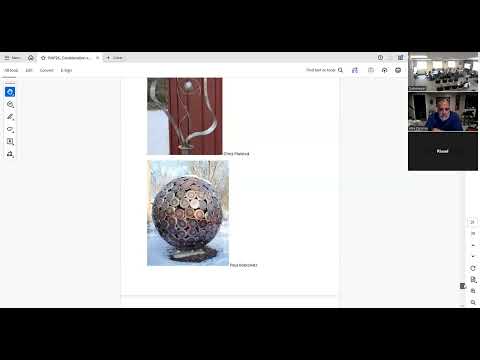
The Green Bay Arts Commission approved five sculptures for its rotating public-art program and directed staff to work with neighborhood associations on placement at its July meeting. The commission said it received 12 submissions, currently has six installed bases and is adding four more bases, and plans to have 10 bases by the end of the summer.
Speaker 2 explained the jury tallies and said juror No. 8 recused because of a conflict of interest; Speaker 2 said they voted in that juror’s place for that section and presented the ranked results. Speaker 2 read the top-ranked entries and identified the commission’s top choices, naming Luke Achtenberg as the top choice, followed by Steve Haas, works attributed to Paul (surname variably recorded in the meeting materials), and Chris Westin among the top five.
After discussion about supporting artists and whether to permit works-in-progress and larger-scale development, Speaker 2 moved to approve the five selected pieces; Speaker 4 seconded the motion and the commission passed it by voice vote. The motion was recorded as passed without a roll-call tally of individual member votes.
Commissioners then debated whether to decide placement at the table or empower staff. Speaker 1 moved that staff be directed to work with neighborhood associations to select locations for the five approved works; Speaker 4 seconded and the commission approved the motion by voice vote. Commissioners said neighborhood associations will be included so the installations “live in their area.”
Commissioners emphasized the need to clarify scale, schedule and RFP language for any artists developing larger pieces, and suggested a two-tier approach to support artist development from smaller works to larger public-scale pieces.
The meeting did not record detailed dollar amounts or a formal roll-call vote for the motions. The commission said staff will follow up with neighborhood associations on placement and return any site recommendations to the commission as needed.