Get Full Government Meeting Transcripts, Videos, & Alerts Forever!
Get email alerts on the Stormwater Infrastructure topic
No spam. Unsubscribe anytime.
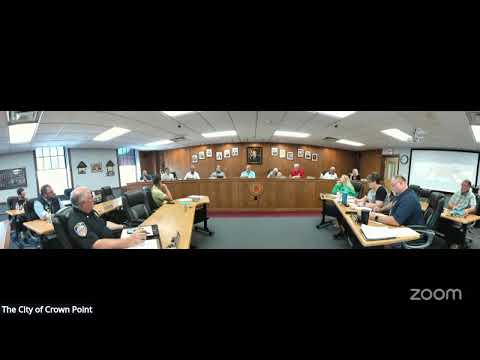
Residents tell Crown Point council flooding and utility bills strain low‑lying neighborhoods
Summary
Two residents urged the council to address chronic flooding in a low‑lying East South Street block and to reassess how utility and infrastructure costs are passed to homeowners amid growing development.
Resident Joe Anzac told the Crown Point City Council on July 6 that his East South Street property has flooded repeatedly since he bought it in 2019 and that the problem predates recent work, tracing it to a historic filled ditch.
"I bought a house on East South Street back in 2019. Been dealing with flooding ever since I moved in there," Anzac said, describing yards that hold water after heavy rain and asking the city for help beyond the interceptor project. The mayor and utilities staff offered to visit the property to assess possible remedies.
Anzac said the city's interceptor project — a larger drainage installation — should improve downtown drainage but expressed doubt it would fix water that is trapped in low‑lying back yards that cannot discharge to the street. He urged a roundtable with affected property owners so the city can identify targeted solutions for those parcels.
Separately, a resident identified as Ken addressed council members about rising utility bills and how infrastructure costs are allocated to homeowners. He asked the council to explore alternatives to the current approach of financing new development infrastructure and urged consideration for residents on fixed incomes.
"Can we find a better way of doing this?" Ken asked, noting the strain on retirees and young families paying monthly bills that include costs tied to development.
Council members responded by offering follow‑up: the mayor and utilities staff agreed to examine individual flooding complaints and to follow up with residents who left contact information. On the billing concerns, the council said staff would take the input under advisement and review options for communicating and managing development‑related charges.
The council did not take formal action at the July 6 meeting on either flooding remedies or changes to developer‑funding practices; both issues were referred to staff for follow‑up or site visits.