Get Full Government Meeting Transcripts, Videos, & Alerts Forever!
Get email alerts on the Noise And Nightlife topic
No spam. Unsubscribe anytime.
Neighbors, operators strike private noise‑monitoring deal as SLA‑1 lays Ambleside application over
Summary
A decades‑long dispute over loud music, vibrations and late‑night traffic at a Lafayette Street venue led to a lengthy public hearing. Operators said they invested in new soundproofing and monitoring; adjacent building managers signed an enforceable agreement. The committee laid the change‑of‑operation application over to review the written stipulations.
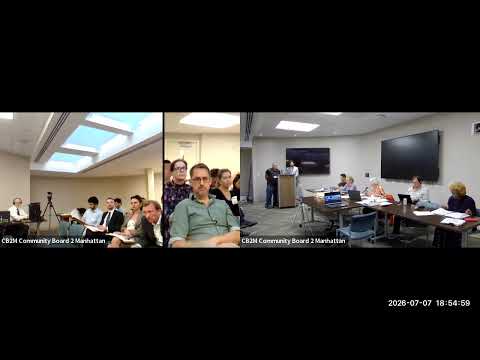
The Manhattan City SLA‑1 committee on Wednesday repeatedly deferred a decision on Ambleside Partners LLC’s request to change its method of operation after more than an hour of testimony from residents and owners about noise, vibrations and late‑night street congestion.
Chair Lisa Donna Raftery opened the discussion and allowed extended public comment after Ambleside representatives described investments to reduce sound leakage. The owners said they had spent heavily to address complaints: “we've gone to significant expenditure probably now over 1000000 dollars,” an operator said, citing soundproofing, monitoring systems and new street‑level traffic control staff.
Neighbors — including building representatives for 285 Lafayette and 57 Prince Street — urged caution. Jamie Ansert, counsel for the two boards, said the adjacent buildings had negotiated a private, legally enforceable agreement with the licensee that includes real‑time sound and vibration monitors in residents’ units and financial remedies for breaches. Ansert asked the committee to consider draft stipulations reflecting those protections.
Residents described years of disruption. “It was sort of like a gridlock type of situation right outside of my bedroom window with people leaning on the horn from 2 until 5 in the morning,” said Nina Roberts, who lives near the site. Alexander Eratov, a resident who said he had been shaken awake by noise and vibration, told the committee the new agreement gives neighbors “a level of control over their operation that we would not get anywhere else.”
Committee members repeatedly said they had not received the private stipulations in time to vet them. Board members pressed operators on why decades of written restrictions previously attached to the license had not prevented repeated problems. Some members said the scale of past noncompliance warranted scrutiny by the state liquor authority.
After discussion the committee agreed to lay the application over so members could review the signed agreement and the draft stipulations before making a formal recommendation. Chair Raftery closed the business session by saying the materials would be shared and the item returned to the committee at its next meeting.
What happens next: The operators and neighbors will provide the committee with the written stipulations and technical monitoring documentation; committee members will review those documents before the item returns to the SLA‑1 calendar.