Get Full Government Meeting Transcripts, Videos, & Alerts Forever!
Get email alerts on the Refuse Fund topic
No spam. Unsubscribe anytime.
West Town Township reviews 2027 refuse fund, recommends holding fees until 2028 bids are clearer
Summary
Township staff presented the preliminary 2027 refuse fund budget and recommended not raising resident refuse fees for 2027 unless neighboring bid results or a contract-price shock for 2028 requires it; the board heard options including pay-as-you-throw, autoloading and increased enforcement for illegal dumping.
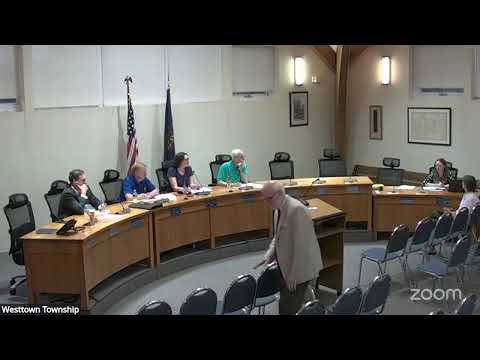
Township staff reviewed a preliminary 2027 refuse fund budget at the West Town Township Board of Supervisors workshop on July 6 and recommended keeping refuse fees at their current level for 2027 while monitoring contract bids from neighboring municipalities and preparing for a possible contract renewal in 2028. Staff said any decision to raise fees would depend on the type of service chosen and on actual 2028 bid results.
Staff summarized the revenue and expenditure picture for the fund. The revenue projection, the staff member said, is built from the township billing count and a $130 quarterly residential fee. Staff also noted variability in recycling grant receipts and delinquent-collection revenues: recent recycling grants ranged from roughly $17,000 to $26,000 in earlier years, but the draft budget uses a conservative $10,000 estimate; delinquent collections historically ran about $15,000 to $20,000 over the last five years; and hazardous-waste reimbursements have been under $2,000 annually. On the expenditure side, staff identified the solid-waste collection contract as the primary cost, reporting the contract is currently in an optional year (the optional-year figure was recorded in meeting remarks as about $1,292,616) and that the next optional year would be about $1,400,000 if exercised.
Pam, the township recycling coordinator, described how the current contract operates: weekly curbside collection of trash and recycling, a revised bulk-item policy that allows one bulk item per pickup (effectively four items a month), and monthly yard-waste collection with extra pickups in November and December. Pam said the hauler owns recyclables collected under the contract and brings them to a materials-recovery facility in York. She also explained the countyprocessing and marketing (PNM) contract that covers multiple municipalities, and that recycling commodity revenue varies month to month.
The board discussed possible service alternatives. Staff and Pam outlined two major structural options for the 2028 procurement: autoloading systems (where the contractor uses mechanized arms and township-owned toters) and pay-as-you-throw (where residents buy bags or toters and pay per bag or per extra toter). Staff warned autoloading can limit container sizes or the number of containers per household and can be less practical on flag lots or streets with parking/topography constraints; proponents say autoloading can reduce labor costs and slow the rate of future increases. For pay-as-you-throw, Pam said the township would likely need to own and replace toters, and that individualized billing would increase administrative work.
Supervisors and staff also discussed regional options. Staff recommended waiting for East Goshens bid results (East Goshen was out to bid at the time of the workshop) to get market signals for service and pricing, and flagged that cross-municipal contracting is complicated because municipal density, contract expiration dates and service profiles differ. Staff suggested adding fuel-price adjustment clauses and considering longer contract terms to lower price risk.
Residents who spoke during the public comment period raised several practical concerns. One resident suggested switching to lidded recycling cans to reduce roadside litter and asked the board to explore commercial composting or community compost facilities; Jack Embig warned that eliminating or charging for bulk pickup could increase illegal dumping and urged the township to plan enforcement and cleanup. Pat McDonough thanked staff for starting the budget review early and recommended community composting at the community garden as a possible pilot.
No formal motion or vote on fees or contract terms occurred at the workshop. Staff said it will review East Goshens bid results, consult the townshipfinancial adviser and bring refined options back to the board for further consideration ahead of the 2028 procurement timeline. The workshop closed with the board scheduled to reconvene at 7:30 p.m. for the supervisors meeting.