Get Full Government Meeting Transcripts, Videos, & Alerts Forever!
Get email alerts on the Facility Use topic
No spam. Unsubscribe anytime.
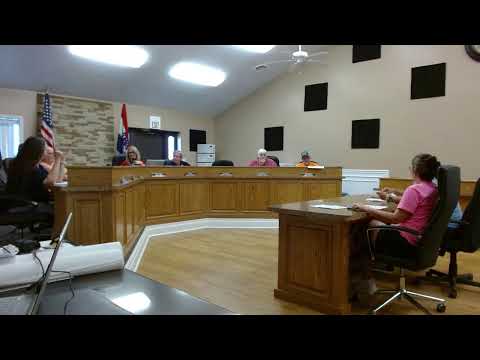
Cuba City meeting examines changes to facility-use agreements amid liability and revenue concerns
Summary
At a Cuba City meeting, staff and program representatives debated proposed changes to facility-use agreements for city fields, focusing on year-long contract terms, maintenance reporting, liability and insurance requirements, handling of excess revenues, blackout-day notice and food-truck rules. Staff was asked to change a $25,000 threshold to $50,000 and prepare an ordinance.
At a meeting in Cuba City, a staff presentation and discussion focused on proposed edits to facility-use agreements that govern how nonprofit youth programs and other groups use the city’s fields and parks.
The meeting transcript does not identify a formal governing body by name. Participants represented staff, committee members and program representatives. Early in the meeting the Chair called for a vote to open a public hearing; an 'Aye' was recorded.
Staff said the draft contracts had been revised to run from January through December rather than on a seasonal basis, and asked whether committee members preferred different dates. "We did change the terms from the original contracts we got from January to December," a staff member said, seeking confirmation of year-long terms.
Committee members asked whether year-long terms would conflict with local sports seasons. One committee member noted that many programs’ seasons end in October and said they might prefer dates that align with local schedules.
Participants debated the contract’s maintenance language and agreed to tighten expectations. Staff asked how to define 'maintain'; the committee agreed the agreement should require groups to "keep clean" facilities and to notify the city when maintenance is needed rather than make volunteer groups responsible for major repairs.
The draft currently lists upkeep of security cameras and lighting in different places. Staff requested adding explicit responsibility for "the upkeep of the security cameras, and lighting," noting that programs supply cameras but that upkeep would be a program responsibility while the city has historically handled field lighting.
A major point of contention involved the clause addressing excess revenues. Some committee members worried that allowing nonprofit groups to retain funds raised from use of city facilities could effectively benefit outside organizations. One committee member warned that nonprofits could keep funds even after leaving city property, since maintaining a 501(c)(3) status could let them retain revenue. Staff and program representatives discussed board discretion and whether to alter the language; staff proposed changing the threshold for reporting or remitting excess revenues from $25,000 to $50,000.
Program representatives raised concerns about termination language that would permit immediate termination and immediate return of facilities. They asked for a notice-of-default process. Staff and others agreed to add written notice requirements and a 30-day cure period before termination, with exceptions for intentional breach.
Liability and insurance were recurring themes. A presenter said they "do not feel comfortable signing an agreement that says that I am solely responsible for all of those individuals when it is an open park that people can attend." The transcript records discussion about limiting liability to registered participants and requiring commercial users or rental groups to carry insurance; staff mentioned requesting a commercial liability policy amount in the neighborhood of $1,000,000 for some uses.
Food-truck and concession rules also came up. Staff noted that food trucks should have business licenses and that some programs permit trucks that do not compete with concession stands; participants debated whether the agreement should include explicit language about food trucks and whether programs should have authority to restrict vendors on city property.
As a next step, participants agreed to revise the draft agreement (including changing the $25,000 excess-revenue threshold to $50,000), add the proposed new clause labeled number 17, and prepare an ordinance for signature. Staff said they would distribute updated documents the following week for review.
A vote to open the public hearing was taken near the start of the meeting and recorded as 'Aye'; the transcript does not provide a complete roll-call or tallies for subsequent formal votes.