Get Full Government Meeting Transcripts, Videos, & Alerts Forever!
Get email alerts on the Community Belonging topic
No spam. Unsubscribe anytime.
Salem Human Rights Commission to send community‑belonging highlights to council; disability‑task recommendations paused for staff refinement
Summary
The commission agreed to advance highlights from a Western Oregon University community belonging survey—showing low belonging and high discrimination among people experiencing homelessness and declines among Latino residents—and to work further with staff on Disability Rights Task Force recommendations before presenting them to council.
The Salem Human Rights Commission reviewed results from Western Oregon University's community belonging survey and discussed draft recommendations linking the survey and the Disability Rights Task Force (DRTF) for a report to Salem city council.
Commission leadership summarized the survey findings: roughly half of the general population (about 50–54%) reports a sense of community, while people experiencing homelessness and Latino respondents reported substantially lower belonging (survey means cited at about 2.5 and 2.9 on a 5‑point scale). Discrimination was reported at much higher rates among some groups: the presentation cited that 84% of people experiencing homelessness and about 57% of Latino respondents reported personal experience of discrimination in the previous 12 months; roughly 59% of respondents with a disability also reported discrimination.
"Discrimination is common and, for some groups, constant," the commission's summary said, noting that nearly half of people experiencing homelessness who witness discrimination report seeing it daily. The presentation also noted trust in the Salem Police Department to handle discrimination is split: roughly 37% agreed the department could handle such cases while 40% disagreed.
Commissioners discussed community impacts and possible council recommendations. Commissioner Georgia Smith and others urged more visible city support for Pride and LGBTQIA+ organizations, saying promotional and leadership visibility matters to community belonging. City staff said the Capitol Pride block party was a city‑sponsored event that received transient tax support and was promoted through the public information office, but commissioners said more consistent public affirmation is warranted.
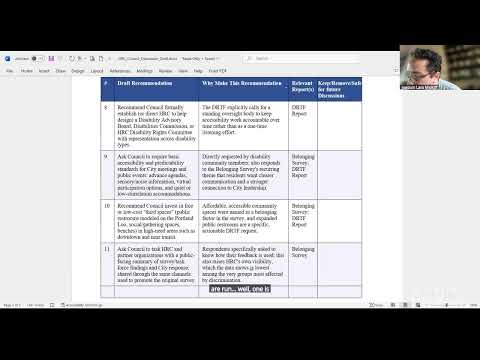
Staff read a list of potential recommendations drawn from the survey and the DRTF including targeted outreach to people experiencing homelessness and Latino and Pacific Islander communities, prioritizing pedestrian and crossing safety near shelters and transit, building universal accessibility into city‑funded housing, exploring incentives for developers to exceed ADA standards, and establishing a disability advisory board.
Several commissioners preferred presenting DRTF recommendations as a separate, fully developed package rather than bundling them with the survey highlights; they requested additional staff collaboration and another meeting to refine wording. The commission agreed to remove a proposed highlight on HRC awareness from the executive summary and instead recommend that elected officials and city staff increase public, visible support for LGBTQIA+ events and organizations.
Staff said the full survey report will go to council and that the HRC will prepare a 1–2 page executive summary and a 5–10 minute slide presentation; commissioners plan to reconvene in September to finalize the package before seeking an appearance on the council agenda later in the year or early next year.
"We've landed on some of the highlights," Chair Robert Marshall said, summarizing the group's agreement to focus on discrimination frequency, declines in belonging among specific groups, and recommendations for visible political support and accessibility improvements.