Get Full Government Meeting Transcripts, Videos, & Alerts Forever!
Get email alerts on the Public Art topic
No spam. Unsubscribe anytime.
Artist Michael Boonstra to install oak-inspired weathered‑steel work at Salem Civic Center
Summary
The Salem Public Art Commission discussed and celebrated the selection of Michael Boonstra to install a drawing‑based Corten (weathering) steel artwork at the Civic Center inspired by a historic Ferry Street oak. The artist described the fabrication, materials, maintenance and community outreach plans; contract and insurance steps remain.
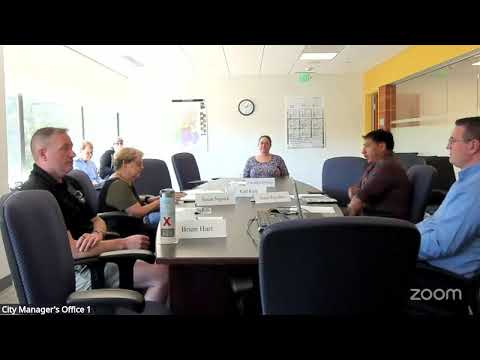
The Salem Public Art Commission on July 8 discussed the upcoming Civic Center installation by artist Michael Boonstra, whose selected proposal draws on the silhouette of a historic Ferry Street oak and will be fabricated in weathering (Corten) steel.
Boonstra said the work begins as a small, ink drawing — "a very small drawing which... will be made into a STL file" — that will be scaled and laser‑cut into weathered Core10 steel panels. He described the final pieces as transpositions of a roughly 7-inch-by-24-inch drawing into larger panels approximately 7 feet by 24 feet, with marks cut from the metal to create a dappled light effect against the Civic Center’s concrete walls. The artist said the steel will be floated about two inches off the elevator shafts and that nylon washers will prevent direct metal‑to‑concrete contact.
Commissioners pressed for technical details. Boonstra said the steel gauge he specified is roughly one‑eighth inch and that Corten steel requires minimal maintenance once the protective patina forms: "It'll take a few months before it starts to really get that nice orangey brown color... it's a very low maintenance material." He also said he plans to make his own ink for the drawings and will produce multiple iterations to test scale and appearance before final fabrication.
The commission recounted the selection process: a subcommittee reviewed about 10 proposals, and Boonstra’s design emerged among the top contenders before being chosen by the commission. staff members at the meeting identified Carl Rolfe and Aaron Gensley as participants in the subcommittee and logistic coordination.
Members discussed community engagement and timing. Commissioners suggested tying the project’s announcement to media interest around the Ferry Street oak’s planned removal and coordinating outreach with the city’s public information officer. Boonstra said he had talked with David Craig at Willamette University about using local oak material for interpretation and noted a separate possibility of using milled oak wood from an already‑removed tree for a bench tied to the project.
Next steps named at the meeting include finalizing contract details and insurance (Boonstra said he was awaiting a certificate of insurance), circulating the artist’s drawings to commissioners, and showing placement options in a 3D civic model at an upcoming meeting. Commissioners and staff indicated they expect further discussion at the September meeting and that staff will finish logistical items before installation.