Get Full Government Meeting Transcripts, Videos, & Alerts Forever!
Get email alerts on the Capital District topic
No spam. Unsubscribe anytime.
Salem narrows capital-district asks: communication center and bridge repairs top the list as water vulnerabilities remain
Summary
City staff asked the committee to limit capital-district advocacy to a few high-priority projects, highlighting the Willamette Valley Communication Center and replacement of failing pedestrian bridges while councilors pressed staff to assess water-supply vulnerabilities and emergency measures already underway.
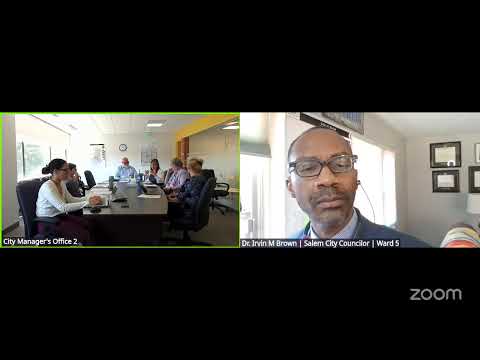
City staff asked Salem's legislative committee on July 10 to narrow its capital-district advocacy to a short list of priorities and said staff will deliver campaign materials to support those asks.
"So right now, the numbers may not mean anything to you, but we have, I don't remember if we have 6 ideas. 6 ideas. We expect there's a sleeper 7th that might come forward," S1 told the committee, and asked members to aim for fewer priorities to improve the odds of success. Staff highlighted the Willamette Valley Communication Center as a principal ask and cited two failing pedestrian bridges in city parks as other candidate projects.
Council members and staff also discussed local water supply and the city's recent emergency actions. S1 reminded the committee that council had enacted an emergency declaration and that the city has taken steps to increase aquifer storage and recovery. Committee members raised the possibility of preemptive state funding or contingency planning to address a potential regional drawdown.
On public-safety and transportation touches, a councilor (S3) suggested asking the state to include a line item for security measures on ODOT property under local bridges and favored naturalistic barriers over fencing: "I prefer boulders because they look more natural than having security fencing," S3 said.
What happens next: staff will circulate campaign materials and final prioritization options and will follow up with public-works staff to assess any immediate water-capacity priorities to include in the fall advocacy package.