Get Full Government Meeting Transcripts, Videos, & Alerts Forever!
Get email alerts on the Zoning Data Centers topic
No spam. Unsubscribe anytime.
Limerick adopts data‑center zoning amendments after hours of public testimony
Summary
Limerick supervisors adopted Ordinance 4‑38 to tighten where data centers may be sited, following extended public comment urging stricter limits on water use, noise and generator emissions; residents pressed for numeric caps and stronger enforcement. The board voted to adopt the ordinance and continue work on additional protections.
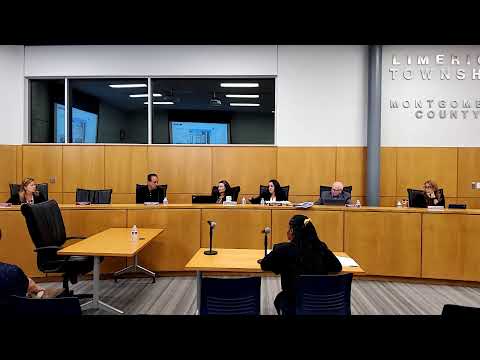
Limerick Township's Board of Supervisors voted July 7 to adopt Ordinance 4‑38, an amendment to the township's zoning rules that updates the data‑center regulatory framework after a public hearing that drew dozens of residents.
Residents at the hearing pressed the board to go further, asking for limits on facility size, water use and emissions. "These ordinances still aren't strong enough to protect the people who live here," said Kara Lehman, a Steinmetz Road resident, who urged limits including a 20‑megawatt cap and water caps measured as a 30‑day average rather than developer estimates.
The ordinance, drafted by township staff and reviewed by the planning commission, updates permitted locations within the LLI/LLI‑interchange overlay and clarifies how the district boundary will be applied. Speakers raised concerns about noise measurement at property lines, diesel generator impacts, road wear from trucks and whether the township can enforce electrical‑rate protections. One resident cited a traffic/decibel comparison to prior rules and asked the board to preserve stronger thresholds.
Supervisors said they heard residents' requests and that the ordinance represents a step forward while leaving open further amendments. Manager and staff emphasized that the two pending conditional‑use applications are being handled separately and would not be affected retroactively. The board voted to adopt the ordinance; members asked staff and legal counsel to return with scope and cost estimates for additional rulemaking and enforcement measures.
The adoption represents an incremental response to community pressure; several residents said they want tighter numeric limits and stronger bonding and enforcement language as staff and the board continue work on the issue.