Get Full Government Meeting Transcripts, Videos, & Alerts Forever!
Get email alerts on the Municipal Finance topic
No spam. Unsubscribe anytime.
Hawaiian Gardens council directs staff to place modernized business-license tax on November ballot
Summary
After a lengthy presentation and debate, the council gave staff direction to pursue a gross-receipts business-license structure for voters to consider in November, debating rate optics and contractor fees before voting to prepare ballot materials.
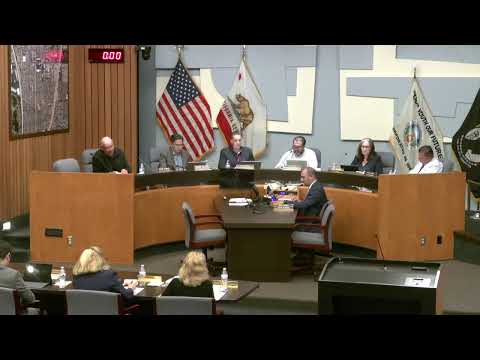
The Hawaiian Gardens City Council on July 8 directed staff to prepare a ballot measure to modernize the city’s business-license tax structure, moving from a 1993-era hybrid code to a simpler gross-receipts model and giving staff direction on proposed rates.
The council’s action follows a presentation from Finance Director Linda and HDL consultant Eric Myers that recommended “Model 1” — a $50 flat fee for businesses with gross receipts up to $30,000 and a $1 per $1,000 rate on receipts above that threshold, with contractors who do not maintain a local office charged a flat contractor fee. Eric Myers said the model would increase projected business-license revenue from roughly $140,000 under the current code to about $594,000 under the recommended approach.
“Option 1 … would be about $594,000,” Myers said during the presentation. He told the council the modernization would also simplify administration and “make it easier for businesses to understand.” Linda said the change was designed to reduce the city’s dependence on dated categories and to address rising municipal costs since 1993.
Council discussion focused on two principal concerns: the scale of increases for a handful of very large local businesses and the voter optics of the per‑thousand rate. One council member pointed to a hypothetical grocery store and asked whether leaping from about $6,000 to more than $20,000 under the recommended rate could harm local retailers. Myers responded that only a small number of businesses would face large increases and that for most businesses the change would be modest.
Councilors also discussed alternatives including $0.75 or $0.50 per $1,000 and whether the contractor flat fee should be reduced from the staff-suggested level. Several members emphasized the need for robust outreach to business owners and residents before an election.
Myers, citing recent voter behavior in other California cities, said tax modernization measures have often succeeded: “I can’t tell you what your voters are gonna do. Historically, these measures are gonna pass, usually with pretty high rates,” he said, noting margins in the high 60s to 70s in comparable cases.
City Attorney staff and legal counsel advised that, if voters approve the measure, an effectuating ordinance would be returned to council to codify the change and that the new license period could be effective on the following January 1.
By motion, the council directed staff to prepare the necessary materials to place a business-license modernization measure on the November ballot and gave staff discretion to refine the specific rate language for the ballot packet and ordinance drafting. The motion carried on a roll call vote of council members present.
Next steps: staff will develop ballot language, ordinance drafts and community outreach materials and return with the required documents to place the measure before voters in the November election.