Get Full Government Meeting Transcripts, Videos, & Alerts Forever!
Get email alerts on the Downtown Revitalization topic
No spam. Unsubscribe anytime.
Bridgewater committee weighs blight designation and property-maintenance ordinance
Summary
The Economic and Development Committee discussed designating a downtown blighted area to unlock state and federal grants and debated a proposed Central Square property-maintenance zoning ordinance; members voiced enforcement and staffing concerns and voted to continue the ordinance for more information.
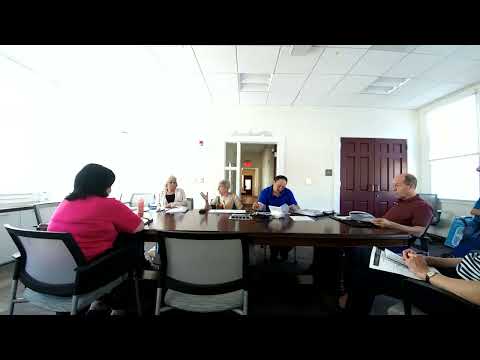
The Economic and Development Committee of the Bridgewater Town Council spent much of its meeting discussing a proposal to designate parts of downtown as a blighted area so the town can pursue community development grants and take stronger action on deteriorating properties. Chair Mary, who led the discussion, said the designation requires an inventory showing roughly 25% of properties in the proposed district meet criteria such as abandonment, structural decline or high turnover.
The committee also considered a proposed Central Square property-maintenance ordinance that would update standards for signs, lighting and historic-district approvals. Mary said the proposal "gives us a little more power to fix up these buildings" and would allow the town to send notice letters under state law when structures present hazards. "We have authority for bricks, sagging lines, damage roofs, broken windows, or structure hazards," she said, urging the committee to move the item forward to the full council for additional review.
Several members warned the ordinance could be ineffective without enforcement capacity. Council member Kevin said he worried about staff bandwidth and called the draft "an empty piece of paper that's not enforceable" if the town lacks personnel or clear penalty schedules. Kevin suggested the subcommittee hold the ordinance to gather input from the building inspector, the planning board and the zoning board before sending it to council for a final vote.
Residents and property owners who spoke during public comment described visible neglect in the downtown core and urged stronger tools. James Wallace, a Crescent Street resident, said he was "tentatively supportive" but wanted to understand whether designating a blighted area would expose the town to any state-level risks such as receivership; Don (Donna Jewel) said property owners who maintain buildings feel frustrated when neighbors do not.
The committee debated approaches to implementation: some members framed the draft as an aspirational foundation to put on the books now and fill in enforcement details later; others pushed for clearer penalties and an enforcement funding plan before advancing it. Members discussed using permit-fee revenue, fines or grant-funded positions to support part-time enforcement or a CED (community and economic development) hire.
After discussion, the committee agreed to continue the item for more homework: members asked the building inspector and planning staff to provide options on fines, enforcement capacity and timing, and to report back so the committee can decide whether to narrow the proposed district or proceed with the broader boundary. The subcommittee voted to continue the ordinance to a future meeting for further review and to gather the requested information.
Next steps: the committee will seek technical input from the building inspector and planning boards and will bring updated enforcement language, maps and funding options when it returns the item to the council for possible referral and public hearings.