Get Full Government Meeting Transcripts, Videos, & Alerts Forever!
Get email alerts on the Zoning Code Update topic
No spam. Unsubscribe anytime.
Lancaster ZBA Members Raise Code Questions After Multiple Accessory-structure Requests
Summary
After approving six variances, Lancaster Zoning Board members questioned whether fixed numeric limits for accessory structures fit different lot sizes and said the town will pursue a code-update grant when available to review fence and pole-barn rules.
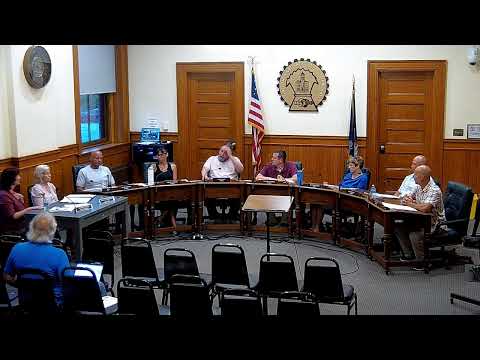
Following a full evening of variance petitions, members of the Town of Lancaster Zoning Board of Appeals discussed recurring patterns in accessory-structure requests and whether numeric limits in the zoning code should reflect lot size and context.
Board members noted an apparent uptick in requests for taller or larger accessory structures in recent months. One member asked whether the current limits — for example, a common 1,250-square-foot maximum and a typical 16- or 20-foot height ceiling — make sense across a wide range of parcel sizes. "It seems that every time somebody comes in building something that's not 1,200 square feet, they say I need to go higher," a board member observed.
Town building staff (Matt) said construction methods have changed — with prefabricated trusses becoming more common — and that those methods often dictate taller interior clearances, which drives height requests. A town staff member noted the town plans to reapply for a grant this fall to fund a comprehensive zoning-code update and that the town board could also direct targeted local-law changes at any time.
Board members discussed options: leave numeric limits in place and continue handling outliers through the variance process, or ask the town board to consider revising area and height limits (perhaps using a percentage-of-lot approach rather than fixed numbers). Staff said the town previously obtained a quote from a code publisher (~$15,000) to perform an update and that applying for grant funding would allow hiring a consultant to review the code comprehensively.
The discussion closed with agreement to pursue the grant opportunity and to draft potential problems for the town board’s consideration. Any code changes would require future public processes and would not affect variances already approved.