Get Full Government Meeting Transcripts, Videos, & Alerts Forever!
Get email alerts on the Utilities Finance topic
No spam. Unsubscribe anytime.
Santa Clara council authorizes up to $350 million interim credit for Silicon Valley Power projects
Summary
The City Council voted 5–1 to authorize a revolving credit agreement of up to $350 million with TD Public Finance as interim financing for Silicon Valley Power’s $480 million capital program, citing flexibility, lower short-term cost and protection of the utility’s credit rating.
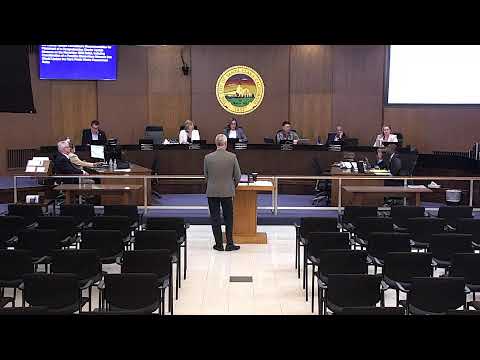
The Santa Clara City Council on July 7 authorized a revolving credit agreement with TD Public Finance LLC not to exceed $350 million to bridge funding for large capital improvements to Silicon Valley Power (SVP).
Acting assistant city manager and chief financial officer Ken Lee told the council the city has already funded part of the program with a first bond tranche and faces roughly $305 million of additional needs tied to three major receiving-station and transmission projects. “This interim financing provides flexibility and cost savings for the utility until a second tranche is approved,” Lee said, describing a plan to draw only what’s needed and later refinance through long-term bonds.
Nico Prokos, SVP director, outlined the work the financing will support, including rebuilding receiving stations (NRS/KRS/SRS), a battery storage project and a new 230 kV transmission line. Prokos said the projects are schedule-driven and are intended to increase SVP capacity from a new peak of about 780 megawatts toward a planned 1,300 megawatts. He told the council the NRS contract cost is about $158 million, KRS about $221 million and related transmission equipment roughly $109.3 million.
Staff and the city’s financial adviser said the line of credit is an interim, five-year facility with an undrawn fee of roughly 20 basis points and potential net-present-value savings versus issuing long-term bonds immediately. Ken Lee said the facility preserves cash and bond ratings by avoiding drawing reserves and spreading costs over time.
Council members pressed staff on who ultimately pays and how residents will be affected. Council member Jane noted residential customers represent a small share of SVP load (about 5.8% under current plans) and asked whether the expansion would increase utility rates; staff answered that most financing costs are borne by commercial and industrial customers, and that the city’s 5% utility tax flows to the general fund and can offset fiscal impacts to residents. Lee also said there are no minimum ‘take’ requirements on the new line of credit, and the city received five responses to its RFP before selecting TD Public Finance.
A public commenter said the amount was daunting but supported the staff explanation; another asked whether project schedules align with unrelated private development — staff said those schedules are independent.
The council approved the staff recommendation by roll-call vote, 5–1 of those present. Staff will execute the documents and return to council with final financing paperwork and any subsequent refinancing plans when appropriate.