Get Full Government Meeting Transcripts, Videos, & Alerts Forever!
Get email alerts on the Red Line Extension topic
No spam. Unsubscribe anytime.
Red Line Extension breaks ground; CTA leaders stress jobs, community control of benefits
Summary
CTA leaders marked the April 24, 2026 groundbreaking of the Red Line Extension and framed the project as a community-driven investment: 5½ miles and four accessible stations south of 95th Street, with job training, hiring pathways and transit‑supportive development intended to keep economic gains local.
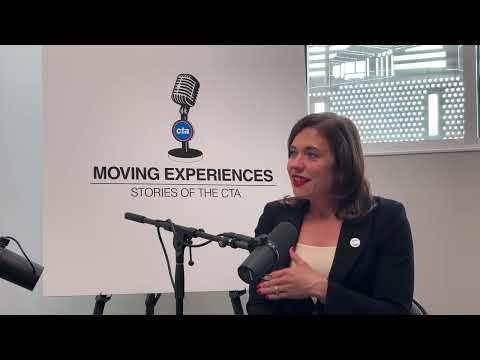
Chicago — The Chicago Transit Authority broke ground April 24 on the Red Line Extension, a five‑and‑a‑half‑mile project extending service south of 95th Street to 130th Street and adding four fully accessible stations, CTA acting president Nora Leersson said on a CTA podcast recorded at the project’s community office in Roseland.
"On 04/24/2026, the CTA broke ground on the Red Line Extension, the largest transit investment in CTA's history," Leersson said, framing the milestone as the start of construction and part of a decades‑long promise to the Far South Side. She added that the extension "will also help create connections with METRA and PACE, our regional transit partners."
The guests on Moving Experiences were Andrea Reid, executive director of the Greater Roseland Chamber of Commerce; Latrice Phillips Brown, director of community relations for the Red Line Extension; and Tanisha Marshall, vice president of the Red Line Extension Project. Each stressed that the project must translate into jobs, training and long‑term neighborhood investment for area residents.
Andrea Reid described how community advocacy sustained the project over many years and said public policy choices had helped shape access to transit: "Transportation, was deliberately cut off at 95th Street," she said, arguing that prior planning decisions contributed to segregation and limited opportunity. Reid cited fare experiments and advocacy that, she said, led to a three‑year pilot funded with a $30,000,000 commitment to test lower fares and broader integration across regional services.
Latrice Phillips Brown outlined CTA’s neighborhood outreach and in‑person services. She said the RLE team operates a community office at 401 West 111th Street as a local hub for residents to meet staff, learn about workforce and small‑business opportunities, and attend mobile office hours with partner organizations. "Our workforce connections starts July 7," Phillips Brown said, noting an on‑site representative will be available on the first Tuesday of each month to share RLE and CTA job and business openings.
Tanisha Marshall, who oversees engineering, procurement, utility relocation and construction coordination for RLE, described current field activity and the near‑term sequence of work: "We broke ground, and we had the drilling of the caissons and foundation work... then eventually, they'll layer in the track and the systems," she said, and added that testing, commissioning and training would occur in the final year before revenue service begins.
Marshall described the scale and coordination the program requires — internal CTA staff, multiple construction and professional services contracts, advanced utility relocation and coordination with city and regional agencies including the Metropolitan Water Reclamation District — and named Walsh VNC Transit Community Partners as the design‑build contractor engaged on the project.
All three guests emphasized strategies to make economic gains stick in the community: boots‑on‑the‑ground outreach, barber‑shop conversations to reach residents, deliberate training and recruiting so that local people can become union‑carded workers with career pathways beyond the project, and transit‑supportive development intended to include affordable housing and recycled investment. Marshall said the station designs were created with community input so neighbors feel ownership of the new facilities.
The CTA and its partners did not announce a contractor hiring list, exact construction workforce totals for each phase or a definitive opening date beyond the project timeline referenced in the conversation. CTA officials said the work has entered active construction and that they will continue public outreach and workforce programming as the project advances.
The conversation closed with Leersson and the guests pledging continued community engagement and periodic public updates as construction proceeds.